Field/project development

TotalEnergies signed off for 30% operated stakes in the Lang Lebah and B14 gas fields offshore Sarawak on the sidelines of ADIPEC in Abu Dhabi, while also highlighting methane-reduction partnerships in Angola, India, and Southeast Asia.

New rules requiring Mozambique’s LNG industry to supply 25% of production to the domestic market could stabilize gas deliveries to South Africa’s Secunda industrial center as the Pande and Temane gas fields near depletion.

This work elaborates on recommended practices for calibrating a numerical model to a set of available infill-well field observations.
-
 Japan’s largest power generator is focused on sourcing Haynesville natural gas production for Gulf Coast export as LNG.
-
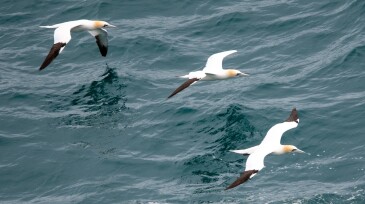
Buoy-based camera footage, analyzed by artificial intelligence, can help reduce the risk of birds colliding with offshore wind farm turbines.
-
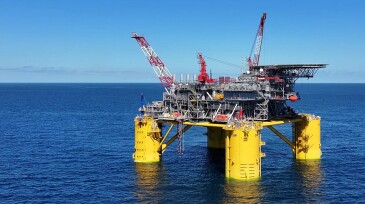
Over a dozen new projects aim to keep US offshore output near 1.8 million B/D through next year.
-
The $2.9 billion Shah Deniz Compression project, expected online in 2029, will enable additional production of around 50 Bcm of gas and 25 million bbl of condensate.
-
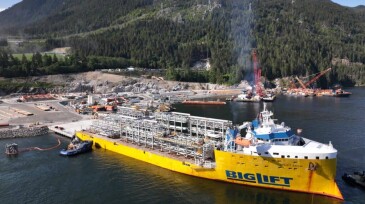
Project expects a total of 19 additional modules to arrive on site during 2025.
-
This paper discusses the effect of injected-polymer viscosity on various aspects of a project, from recovery to surface facilities, including both theoretical arguments and practical field experience—which do not always align.
-
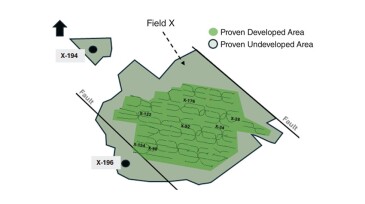
This study leverages oil-fingerprinting technology and geochemical data to evaluate the fluid connectivity between a main field and its stepout wells.
-
Updates about global exploration and production activities and developments.
-
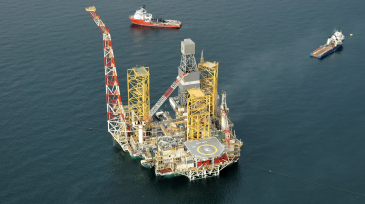
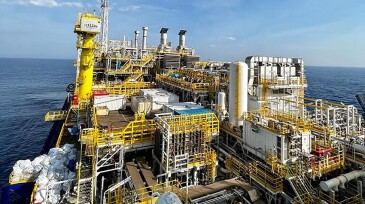
Once labeled “undrillable,” Brazil’s heavy-oil Atlanta field in the Santos Basin faced technical, financial, and logistical challenges. But through a phased approach, clever reuse of assets, and disciplined project execution, Brava Energia transformed a risky deepwater asset into a producing field with 172 million BOE in 2P reserves.
-
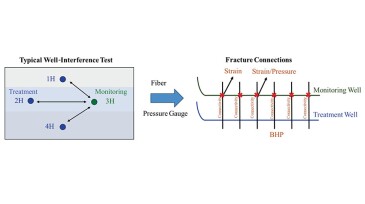
This work proposes a method to interpret far-field strain-change and pressure data to quantify fracture connectivity and properties at the cluster level.