Field/project development

With $9.6 billion in assets in the market, the focus is shifting from who is exiting Southeast Asia to who is positioning for entry through acquisition, according to Rystad Energy.

Shell has reached FID on LNG Canada Phase 2, a major expansion that will double the Kitimat facility’s LNG export capacity to 28 mtpa and strengthen long-term supply to growing Asian markets.

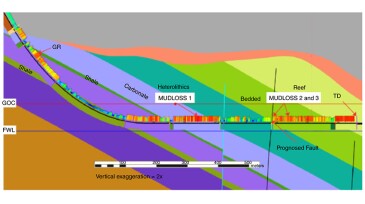
This paper presents an approach for safe, efficient, and cost-effective legacy well reabandonment.
-
 This paper discusses cases from the North Sea and offshore California in which high-fidelity pressure and dynamics measurements, combined with high-speed telemetry, helped overcome complex geotechnical challenges.
 -
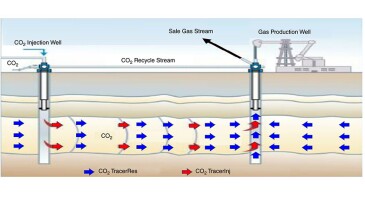
This study explores the feasibility of implementing in-situ carbon dioxide recycling for sequestration as a fit-for-purpose developmental strategy for a Malaysian gas field characterized by an initial carbon-dioxide content of approximately 60%.
-
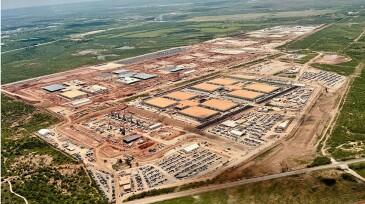
The technology to desalinate and reuse produced water for cooling AI data centers in the Permian Basin exists, but addressing cost challenges remains critical to widespread adoption.
-
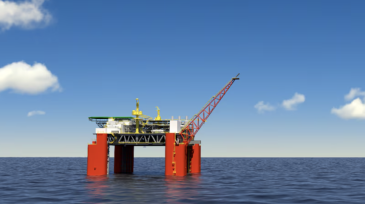
The $5-billion Tiber-Guadalupe project in the Gulf of America is BP's second major project in the region to be sanctioned in 2 years.
-
Smackover Lithium, an Equinor joint venture, will drill new wells on the Franklin project to get a better understanding of its brine makeup and lithium potential.
-
Angola expects an 18% rise in natural gas production by 2030 as global producers invest in offshore exploration and new field development.
-
The subsea field is part of the larger Snøhvit development in the Barents Sea.
-
Iraq’s Gas Growth Integrated Project aims to increase electricity generation by capturing flare gas collected from three southern oil fields. A desalination project will use treated seawater to maintain well pressures.
-
MODEC will supply the FPSO that will host up to 18 wells in the initial phase of development.
-
BW Opal FPSO has capacity for 850 MMcf/D of gas, which will be treated and sent on to the Darwin LNG facility, and 11,000 B/D of condensate, which will transferred via tanker.