Field/project development

Thanks to stepout-well and tieback technologies, Shell’s Mars platform is the first single offshore platform in the US Gulf to produce 1 billion bbl of crude over its lifetime with production expected to continue into the 2040s.
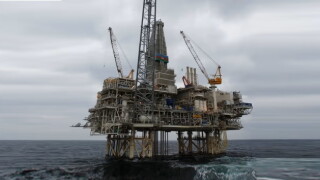
BP said it expects to keep the Azeri-Chirag-Gunashli (ACG) project in production into the 2040s by tapping into separate nonassociated gas reservoirs.

INEOS Energy and Shell have partnered to invest in Gulf of Mexico exploration, while Eni reported strong productivity from its Geliga 1 discovery in Indonesia. Santos is advancing its Agogo project in Papua New Guinea, and ConocoPhillips received approval to redevelop several previously producing oil fields in Norway’s Greater Ekofisk Area.
-
 This paper describes a novel 6.75-in. logging-while-drilling geochemical tool developed for accurate lithology, mineralogy, well-placement, and geosteering applications in complex reservoirs.
 -
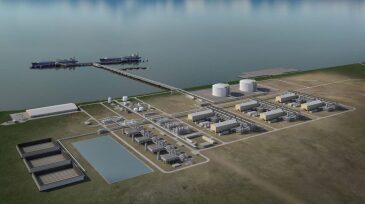
A series of major advances will move Phase One of the Alaska LNG Project from the development phase into execution.
-
The expansion project by QatarEnergy is expected to increase LNG production capacity to 142 mtpa when it goes online.
-
The Nasr-115 expansion project, within ADNOC’s larger Ghasha concession, is part of a development aimed at increasing capacity to 115,000 BOPD by 2027.
-
Woodside’s $12-billion gas project offshore Western Australia is expected to produce up to 8 mtpa once it’s complete.
-
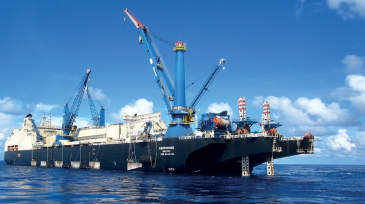
Engineering, procurement, construction, and installation awards made at the end of 2025 are expanding Saipem’s role in Turkey’s two largest offshore gas fields, plus Saudi Arabia’s Berri, Abu Safah, and Marjan oil fields and Qatar’s North Field gas giant in the Persian Gulf.
-
The platform brings the field’s installed production capacity to 1.5 million BOPD.
-
Updates about global exploration and production activities and developments.
-
This paper describes a data-driven well-management strategy that optimizes condensate recovery while preserving well productivity.
-
This paper describes an auto-adaptive workflow that leverages a complex interplay between machine learning, physics of fluid flow, and a gradient-free algorithm to enhance the solution of well-placement problems.