Field/project development

Assets consolidated into the Searah JV include Eni-operated deepwater gas-condensate developments in the Kutei Basin, offshore East Kalimantan, Indonesia.

Five agreements target more than 11 Tcf of offshore gas and include flare-reduction technology.
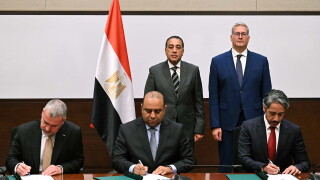
ExxonMobil and QatarEnergy’s MoU with Cairo to monetize Cyprus’ offshore Glaucus and Pegasus natural gas supports Egypt’s strategy to become the Eastern Mediterranean’s leading gas processing and LNG export hub.
-
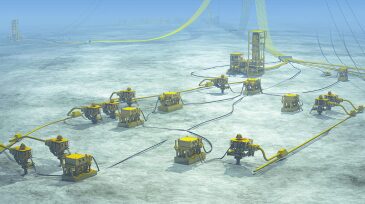
 Plans were developed to produce multiple deepwater reservoirs with vastly different fluid properties from a subsea development in 3,100 ft of water in the Gulf of Mexico.
 -
The Mensa field is a deepwater Gulf of Mexico (GOM) geopressured-gas field, producing from Upper Miocene sand with faulted four-way closure.
-
The success rates of E&P megaprojects has dropped over the past decade. What is causing this falloff in performance?
-
Project management is one way to keep an eye on the big picture. Focusing on the little things too can increase your bottom line. The complexity of modern facilities construction projects necessitates a cradle-to-grave approach to managing projects over long periods of time.
-
Facilities engineering has grown with the industry’s advance into deep water and the development of complex subsea systems to produce the resources found there.
-
Shell’s Parque das Conchas project, an ultradeepwater heavy-oil development in the northern Campos basin offshore Brazil, has won the IPTC Excellence in Project Integration Award. The award recognizes significant and unique achievements in managing and directing a project from discovery to delivery.
-
Earlier studies showed that the results of oil and gas megaprojects were quite similar to the results from other industries. More investigation shows a poorer track record, largely due to the poor functional integration that characterizes upstream project organizations.
-
The ultimate success of a deepwater project depends on phases from early concept selection, design, construction, commissioning, and startup to operation. However, the boundaries and transfer of responsibilities may not be sharply demarcated between phases.
-
Cost estimation for facilities depends on early concept selection and critical inputs, often complicated by uncertainty in one or more of the critical inputs. Empirical cost models and cost modeling methods using these inputs vary in degrees of scope, comprehensiveness, and robustness.
-
Final commissioning and initial startup was the source of lively discussion at a recent applied technology workshop held in New Orleans. A summary of key points is provided.