Formation damage

This paper presents laboratory-testing methods and evaluation criteria designed to improve understanding of both the origin and extent of formation damage associated with CO2 injection.

This work introduces an analytical model for nonisothermal CO2 injection that accounts for both Joule-Thomson cooling and interformation heat exchange.
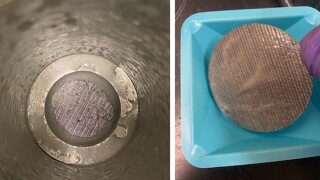
This paper describes development of a high-temperature water-based reservoir drill-in fluid using a novel synthetic polymer and customized with optimal chemical concentrations and sized calcium carbonate.
-
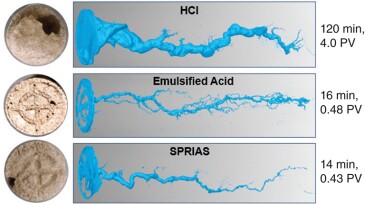
 The authors describe the benefits of a single-phase retarded inorganic acid system, which they write features the same benefits as emulsified acids while eliminating the drawbacks of the latter.
 -
The adage “prevention is better than cure” is the first thing we consider regarding formation damage, but how prepared we are for the treatment and cure to allow a well to perform to its full productivity or injectivity potential? And how can digital tools be an effective enabler?
-
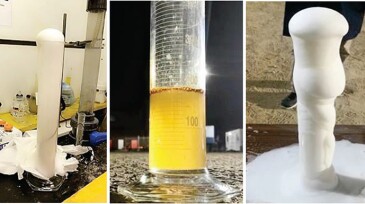
This paper presents a novel sandstone-stimulation technique using thermochemical fluids.
-
The obsession with better hydraulic fracturing has steadily pushed on shale production in year one, but the decline remains steep. Chemistry could help explain, and perhaps extend, the short productive life of these wells.
-
The authors of this paper propose a new chemical treatment for efficient remediation of water- or hydrocarbon-phase-trapping damage in low-permeability porous media.
-
Laboratory formation damage testing is often used to help select optimal drilling and completion fluids, but predicting the overall effect of formation damage on well performance requires further interpretation. Paper SPE 199268 presents a case for use of CFD to upscale laboratory data to quantify that effect.
-
Laboratory studies performed for evaluation of filter cake breaker fluid exposed limitations with a conventional test approach.
-
The combined effect of formation and completion damage is the observed well productivity development with associated skin and productivity index. Completion damage has the potential to affect well productivity to the same degree as formation damage.
-
One of the frustrating aspects of well-productivity analysis is identifying the causes of lower-than-expected production/injection during initial well lifetime. Our task is to evaluate the multivariate aspects of well design.
-
For the development of the Dvalin high-pressure/high-temperature (HP/HT) gas field in the Norwegian Sea, a completion scheme using standalone screens is planned.