Fracturing/pressure pumping

The Seismos full-scale research center opens to industry, universities, and national laboratories, advancing acoustic sensing across upstream energy, pipelines, critical infrastructure, and national security.

This article from the SPE Research and Development Technical Section offers new insights to how the upstream industry can benefit from the emergence of quantum computing.

This contributed article highlights the growing importance of fiber-optic sensing and its potential to advance thanks to emerging quantum technologies.
-
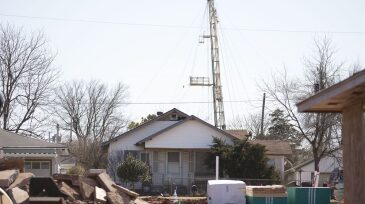
 Oklahoma is tightening its rules for hydraulic fracturing after studying a new cluster of earthquakes in one of the hottest US regions for drilling.
 -
During a panel discussion on what fractures look like, one expert added a significant qualifier to the title: what they “may look like.”
-
Significant improvements to completions design and manufacturing have been made recently to accommodate long laterals and multiple fracturing or acidizing stages for different reservoir types, lithologies, and conditions.
-
This paper describes numerical-simulation results from a three-well pad in a stacked liquids-rich reservoir (containing gas condensates) to understand the interaction between wells and production behavior.
-
The Kaji Semoga Field in South Sumatra consists of three main reservoirs—Telisa sandstone (TLS), Baturaja limestone, and Talangakar sandstone. The successful development of TLS with hydraulic fracturing led to further efforts to maximize oil recovery.
-
This paper summarizes key engineering discoveries and technical findings observed during the execution of 200 hydraulic-fracturing diagnostic injection tests in the Raageshwari Deep Gas (RDG) Field in the southern Barmer Basin of India.
-
Recycling produced water may not be the soundest economic decision for operators of hydraulic fracturing projects. A water logistics expert examines the design considerations companies must account for with full-cycle water management systems.
-
The rising oil production and produced water volumes in the Permian are expanding the scope and scale of recycling. Apache is aiming to have 50% of its hydraulic fracturing water made from recycled produced water this year.
-
The rising oil production and produced water volumes in the Permian are expanding the scope and scale of recycling. Apache is targeting 50% of its frac water to be made up from recycled produced water this year.
-
Analysts at Rystad Energy, an oil and gas consulting and business intelligence data firm, anticipate a strong year ahead for North American shale oil producers.