Health

With millions of wells having been drilled in the US since the beginning of the oil age, the land is pocked with old, unused wellbores. For most, repurposing is a pipe dream. Plugging is the best option.

This paper explores how artificial intelligence (AI), cognitive models, and integrated digital tools can transform readiness from periodic drills into a continuous, measurable capability.

This paper presents a competency-centered, data-driven approach implemented to strengthen control-room emergency-response capability through a cloud-hosted, scenario-based virtual plant simulator.
-
 Recent advancements in wearable technologies have opened multiple avenues for innovation. The oil and gas industry can make use of the smart watch, in particular, to monitor the health of oilfield workers.
 -
Levels of stress and mental health problems among UK workers are at a 17-year high, according to the latest injury and ill health statistics published by the Health and Safety Executive.
-
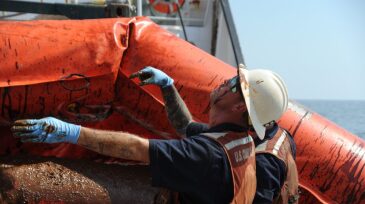
The response to the 2010 Deepwater Horizon oil spill was affected by heat. This paper evaluates the association between environmental heat exposure and self-reported heat-related symptoms in US Coast Guard Deepwater Horizon disaster responders.
-
The UK’s offshore oil and gas industry continued to see improvement across a broad range of health and safety indicators last year, according to a key insight published by Oil & Gas UK.
-
Colorado's Proposition 112 would increase the minimum distance required between new oil and gas wells and homes, schools, and other designated areas to 2,500 ft—more than twice the current required distance — in an effort to protect public health.
-
The Advanced REACH Tool is a mechanistic higher-tier model to estimate inhalation exposure to chemicals using a Bayesian approach. This paper provides a discussion of the key modifying factors that should be considered to extend the model to include welding fume exposure.
-
Increasing evidence suggests that welding-fume exposure is associated with systemic inflammation.
-
Though many people understand that employers have workplace responsibilities regarding their employees' health and safety, far fewer understand that the employees also have certain legal obligations they must meet.
-
This systematic review aimed to evaluate the association between shift work and eating habits and suggests that shift work can affect the quality of workers’ diets. Shift workers show changes in meal patterns, skipping more meals and consuming more food at unconventional times.
-
Academic scientists and advocacy groups are urging the Environmental Protection Agency to withdraw and rewrite proposed guidelines for determining which scientific findings to use when evaluating the safety of toxic chemicals.