HSE & Sustainability

The 2025 report confirms for the second year that the Appalachian Basin has the lowest methane intensity of any major oil and gas basin in the US.

The North Sea Transition Authority has advanced the UK’s plans for carbon storage by approving the drilling of a proposed appraisal well off the coast of Teesside.

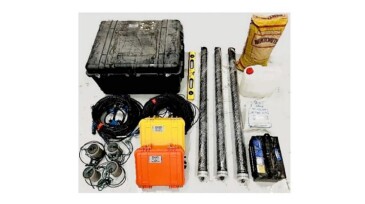
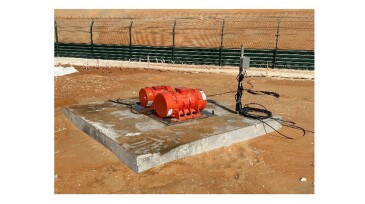
Smart Seismic Solutions plans to use 50,000 nodes to examine storage potential for the Greenstore CCS project.
-
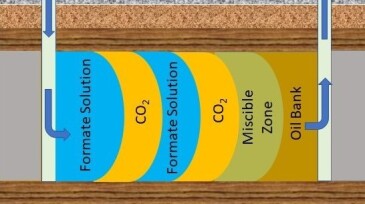
 In a study that applied alternative carbon carrier technology to enhanced oil recovery (EOR) scenarios, researchers at The University of Texas at Austin found that the new method recovered up to 19.5% more oil and stored up to 17.5% more carbon than conventional EOR methods.
 -
The spring Unified Agenda provides a snapshot of efforts to advance the president’s plans for fossil fuel exploration and infrastructure.
-
This paper presents a physics-informed machine learning method that enhances the accuracy of pressure transient analysis, predicting reservoir properties to enhance waste slurry injection and waste disposal.
-
This study assesses the advantages, constraints, and necessary enhancements of both passive and active electromagnetic techniques in the context of carbon capture and storage.
-
The paper describes the deployment of fiber-optic monitoring of CO₂ injection and containment in a carbonate saline aquifer onshore Abu Dhabi.
-
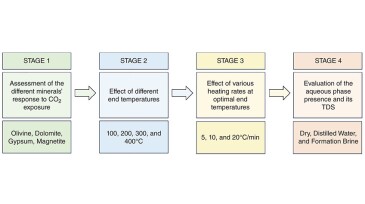
This paper presents a novel methodology for assessing the rapid mineral carbonation of carbon dioxide through geochemical interactions with carbon-, magnesium-, and iron-rich minerals abundant in geological formations.
-
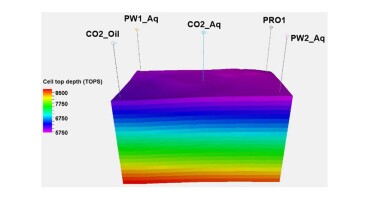
This paper presents a novel workflow with multiobjective optimization techniques to assess the integration of pressure-management methodologies for permanent geological carbon dioxide storage in saline aquifers.
-
This paper details the formulation and characterization of a novel nanoparticle system composed of polyethyleneimine and dextran sulfate for direct lithium extraction from bulk oilfield brines in North America.
-
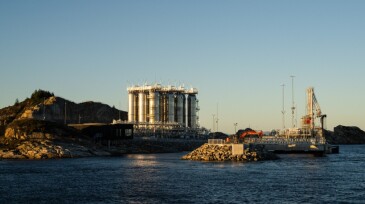
The initial phase of the carbon capture and storage project has a capacity of 1.5 million tonnes per year, with a second phase—due online in 2028—expected to bring the storage capacity to 5 million tonnes per year.
-
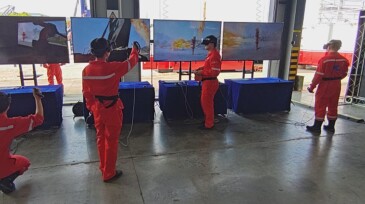
Through realistic simulations, virtual reality allows for an unprecedented level of immersion and interactivity that traditional training methods cannot offer.