HSE & Sustainability

Located along the North Sea, the Humber is expected to play a central role in the UK’s effort to achieve a net-zero emissions status by 2050.

This article addresses the challenges of managing water-soluble organics (WSOs) in offshore produced water. It provides a brief discussion of the chemistry, along with strategies and technologies that can be used to manage WSO levels in produced water, thus facilitating compliance with regulatory overboard water-quality guidelines.

Spain has granted permits covering a swath of the mountain range to Mantle8 for natural hydrogen and helium exploration a month after France granted the company similar permits.
-
 This paper introduces an AI-driven digital fencing system designed to boost security in oil and gas fields. The main objectives are to improve security and safety of oil and gas facilities while addressing the limitations of legacy physical barriers, reducing false alarms, and eliminating the dependability on the grid in favor of renewable energy.
 -
The ruling means the state will take over permitting and enforcement of EPA regulations pertaining to all classes of wells, including injection wells for carbon dioxide storage.
-
Petronas CCS Ventures receives Malaysia’s first offshore assessment permit for carbon capture and storage in the Duyong field offshore Peninsular Malaysia.
-
SponsoredAdvance your career with the new Pipeline Engineering Program at the Technical University of Leoben, a 5-month course combining on-campus and online learning, integrating industry expertise, engineering practice, and future-ready skills for professionals in oil, gas, and emerging energy systems.
-
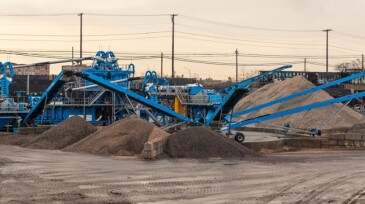
The growing adoption of soil washing is driven by stricter environmental regulations and advancements in technology, which enhance its efficiency and cost-effectiveness.
-
Regulators pull from experiences in the oil and gas industry to define best stewardship practices for the nascent CCS industry.
-
Growing energy transition investment highlights oil and gas technologies as key enablers.
-
This article is the fifth in a Q&A series from the SPE Research and Development Technical Section focusing on emerging energy technologies. In this edition, Shantanu Agarwal, founder and CEO of Mati Carbon, discusses how the company’s approach to carbon removal led to winning the Musk Foundation’s XPRIZE in 2025.
-
EERC CEO Charles Gorecki outlines how applied research in North Dakota is helping improve oil recovery, reduce emissions, and advance carbon storage.
-
2025 has seen an 81% year-on-year rise in the number of small modular reactor designs to have secured at least one source of funding or a funding commitment.