HSE & Sustainability

The 2025 report confirms for the second year that the Appalachian Basin has the lowest methane intensity of any major oil and gas basin in the US.

The North Sea Transition Authority has advanced the UK’s plans for carbon storage by approving the drilling of a proposed appraisal well off the coast of Teesside.

Smart Seismic Solutions plans to use 50,000 nodes to examine storage potential for the Greenstore CCS project.
-
 DNV’s carbon capture and storage outlook forecasts a massive shortfall in the projects necessary to help the world reach net-zero emissions by 2050.
 -
Nigeria’s Petroleum Industry Act 2021, a Pathway for Economic Prosperity and Sustainable DevelopmentThis paper presents a comprehensive review of the updated regulatory structures, general administration, and functions of regulators to provide a clear focus for industry stakeholders.
-
Buoy-based camera footage, analyzed by artificial intelligence, can help reduce the risk of birds colliding with offshore wind farm turbines.
-
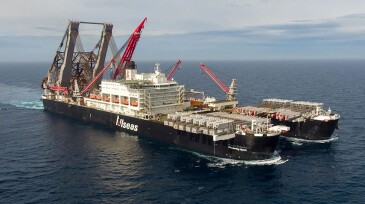
The Dutch marine contractor says it plans to outfit its construction vessels with small modular reactors over 5 years.
-
Artificial intelligence is transforming how organizations enhance safety performance and build a strong culture of safety excellence.
-
The Society of Petroleum Engineers conducted a survey in May 2023 to determine the status of diversity and inclusion in the energy industry. The survey consisted of seven demographics and 15 multiple-choice and five open-ended questions.
-
The urgency of methane emissions reduction in the oil and gas sector demands a strategic approach to change management. Success hinges on fostering a shift in industry mindset, where emissions reduction is embedded into operational design and decision-making rather than seen as a regulatory burden.
-
The report presents data from 35 participating member companies.
-
The early enthusiasm for carbon capture and storage (CCS) is showing signs of strain as the limited capital availability and political support become clearer.
-
This paper describes the use of coiled tubing in a pilot project for carbon dioxide injection, enabling evaluation of the conversion of an existing oil field for CCS purposes and derisking storage-development uncertainties before having to cease hydrocarbon production.