HSE & Sustainability

While Uzbekistan has seen a significant drop in flaring, methane leaks from deteriorating infrastructure continue to reveal themselves to satellites in space.

The department announced it plans to combine the Bureau of Offshore Energy Management and the Bureau of Safety and Environmental Enforcement into the Marine Minerals Administration.
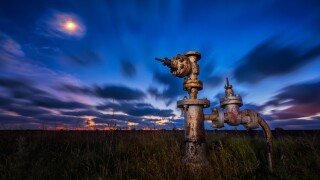
While some idle wells may be brought back into production, many will be plugged and abandoned. This paper considers repurposing certain idle oil and gas wells by using their empty steel casing for the disposal of nuclear waste.
-
 The drop in energy use caused by the coronavirus pandemic is not enough by itself to meet Paris climate ambitions, says DNV GL.
 -
The partnership will deliver autonomous robots for safe work in adverse land, sea, and downhole environments.
-
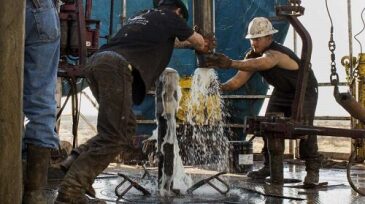
Oil drilling produces up to 10 gallons of water for every barrel of oil. While the Environmental Protection Agency has balked at allowing oil companies to treat drilling waste water and discharge it into streams, oil-rich states, including Texas, are moving forward with plans to permit it.
-
The two companies have teamed up to provide COVID-19 testing for oil and gas companies that want to test their employees at headquarters and remote rig locations across the country.
-
The 25 May death of George Floyd, a black man, at the hands of Derek Chauvin, a white Minneapolis police officer, sparked national and international protests—and the oil and natural gas industry was not immune to the calls for social change.
-
A report from the Norwegian Petroleum Directorate details how production powered from shore would cut down on carbon dioxide emissions. All of the planned projects from the onshore power grid are expected by the mid-2020s.
-
This paper will discuss the importance of proactive operator monitoring (POM) as a safety barrier, explore some of the mechanisms by which monitoring can be defeated or degraded, and consider the kind of safeguards that might need to be put in place to prevent such degradation.
-
Apache, Qatar, and Shell clinch best discovery, best new venturer, and energy transition leader.
-
Satelytics, a US-based geospatial analytics software startup, will receive $5 million from BP Ventures to develop its methane-detection technology and then scale its applications across the oil and gas sector.
-
With their gee-whiz—albeit artificial—intelligence, robots may be the industry’s answer to jobs deemed dangerous, dirty, distant, or dull.