HSE & Sustainability

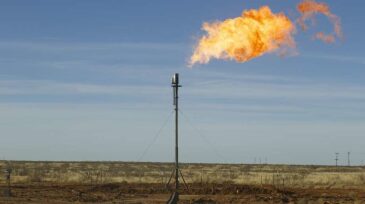
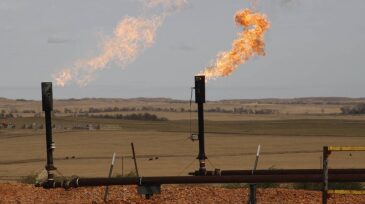
While Uzbekistan has seen a significant drop in flaring, methane leaks from deteriorating infrastructure continue to reveal themselves to satellites in space.

The department announced it plans to combine the Bureau of Offshore Energy Management and the Bureau of Safety and Environmental Enforcement into the Marine Minerals Administration.
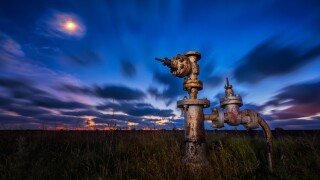
While some idle wells may be brought back into production, many will be plugged and abandoned. This paper considers repurposing certain idle oil and gas wells by using their empty steel casing for the disposal of nuclear waste.
-
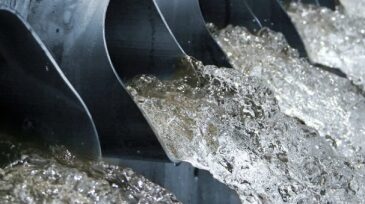
 Oil and gas extraction using water has opened up new hydrocarbon resources. However they can produce four times more salty water byproduct than oil. Desalination in shale gas and polymer-flood EOR remain niche markets for lowering cost and improving production.
 -
DuPont Microbial Control research scientist and “microbial detective” Geert van der Kraan shares the clues that microbial life leaves behind to help make the extraction process cleaner in a recent TED Talk.
-
With a $10 million commitment from Shell, Rice University has launched Carbon Hub, a research initiative with the goal of creating a zero-emissions world by using oil and gas to create clean energy.
-
As part of the contract, Wood will provide the topside modifications needed for the Snorre A and Gullfaks A platforms to integrate the Hywind floating wind park with existing systems powering the facilities. The platforms will be the first to receive electric power from floating wind turbines.
-
A Denver-based company has been installing data centers at shale drilling sites to take advantage of excess natural gas. Now, according to a new Bloomberg report, that company hopes to harness some of that gas to power data centers for Bitcoin mining.
-
As The Environmental Partnership celebrates its second anniversary, the coalition of oil and natural gas companies has grown 150% to 70 members while continuing efforts to reduce emissions from natural gas production.
-
In recent years, the participation of midstream water companies has changed the dynamics of water management.
-
Remote sensing technologies can be applied for a wide range of gas-leak flow rates in three main cases—major leaks in crisis management, medium-size leaks in safety monitoring, and small leaks in environmental monitoring.
-
The organization said the new standard, which focuses on air safety and data protection, is the first step in a wider move to promote the use of drones within a framework of approved regulatory compliance.
-
According to a new report from the EIA, the volume of natural gas reported as flared reached its highest average annual level in 2018, 1.28 Bcf/D. With production soaring in the Bakken, Permian, and Eagle Ford plays, North Dakota and Texas accounted for more than 80% of that total.