HSE & Sustainability

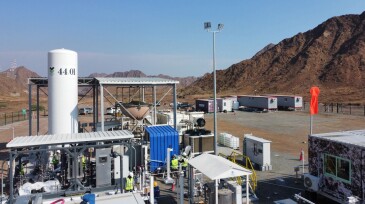
This paper presents a flexible, highly cost- and energy-efficient method of gas separation and CO₂ capture from many different gas mixtures with a large range of CO₂ concentrations.

Emissions management covers a wide array of topics such as carbon capture, use, and storage; emissions monitoring; flare management; methods to improve operational efficiency; carbon accounting; and the effect of emissions management on global and local economics. The papers published in the past year span all these subcategories.

This study explores the carbon-capture and mineralization potential of ultramafic rock powders when exposed to flue gases generated from combustion of crude oil and mesquite-derived charcoal.
-
 Operator also announces plans to deploy continuous, real-time detection equipment at all its operated upstream sites, including GranMorgu, by the end of 2025.
 -
A comprehensive, digitized water-management application has been designed to streamline and enhance the monitoring and management of water resources used in hydraulic fracturing.
-
The rule, part of the Inflation Reduction Act established by Congress, allows the Environmental Protection Agency to charge large emitters of methane if they surpass specific levels.
-
With emissions mineralization established as a proven approach, the companies’ next objective is to move the underlying technology toward commercial success.
-
The report details the company’s actions to reduce methane emissions across its operations.
-
The US Department of Energy presented the loan to LongPath Technologies to support the buildout of a high-frequency methane emissions monitoring network in US oil and gas production basins.
-
The sheets are intended to allow spill responders to quickly find information on the physicochemical properties of the fuel or product, appropriate response and clean up options, and potential effects on responder health, the environment, and marine life.
-
GE Vernova and Vineyard Wind provided an update on the implementation of their plan to safely remove the remainder of the damaged blade on turbine AW-38, remove any remaining debris, complete environmental studies, implement actions for blade readiness for service, and, ultimately, resume turbine installation and operations.
-
Australia must insist on full removal when ExxonMobil decommissions the offshore project, the Wilderness Society has said.
-
Hull fouling is a huge problem and is estimated to account for 9% of the global fleet’s fuel consumption every year. Initial theoretical, laboratory, and land-based tests supported by independent experts have led to promising results showing that ultrasound can prevent biofouling.