HSE & Sustainability

The companies have released the Event Learning Taxonomy CLUE, which aims to improve the understanding of incidents beyond individual blame and toward clearer reporting and increased learning.
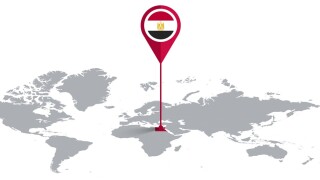
A memorandum of understanding between the companies targets technical services for safety and performance across Egypt’s onshore and offshore assets.

No injuries were reported, and work has been suspended on the North Sea rig while the BOP is recovered.
-
 On 2 January, Syncrude Canada pleaded guilty in the Alberta Court to one count of violating the Migratory Birds Convention Act, 1994, along with several provincial charges.
 -
Water management for unconventional projects continues to evolve at a rapid pace. What are some of the universal trends industry is adopting to handle higher produced water volumes and increased demand, and how do local dynamics impact the adoption of these trends?
-
Occupational exposure to vibration has been associated with an increased risk of musculoskeletal pain in the back, neck, hands, shoulders, and hips and also may contribute to the development of peripheral and cardiovascular disorders and gastrointestinal problems.
-
This study investigated the association between occupational noise exposure and the risk of elevated blood pressure and hypertension by stage in young adults.
-
One of the more significant benefits of drones in the field to date has been their ability to improve safety in the field.
-
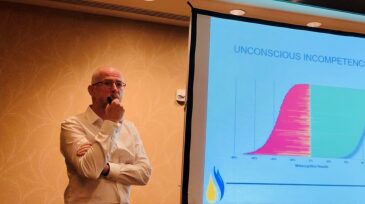
Safety training must hurdle barriers built by people’s confidence in their misconceptions.
-
Johanna Dunlop, SPE’s technical director for health, safety, and environment, talks about efforts to create sustainability standards and to honor those doing top work.
-
Saudi Aramco’s Southern Area Oil Operations (SAOO) organization is one of the company’s critical areas of operations. This paper sheds light on SAOO’s continuing journey of sustainability and discusses implemented and planned activities that make sure the journey continues.
-
The term sustainability is widely used. Unfortunately, when applied to hydrocarbon energy sources, it is often mentioned in a negative way. Too often, the focus is on reducing the use of hydrocarbon fuels or measuring the emissions resulting from burning of hydrocarbon products.
-
The most recent report from the United Nation’s Intergovernmental Panel on Climate Change and December’s international conference on climate change held in Katowice, Poland, show that the world is not coming close to reaching the targets set in the landmark Paris Agreement of 2015.