HSE & Sustainability
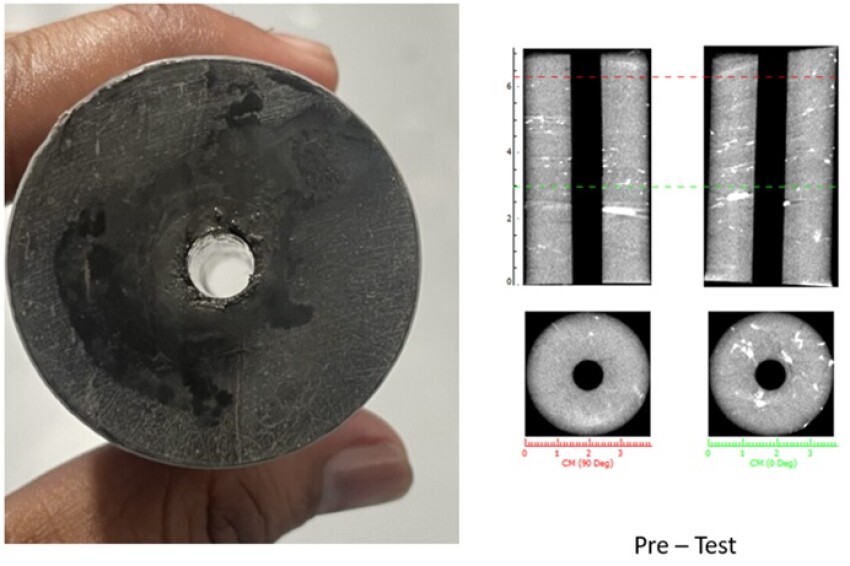
An investigative study examines the use of creeping shale formations as a more durable alternative to conventional cement barriers in carbon dioxide storage wells, potentially enabling safer long-term underground carbon storage.

The companies have released the Event Learning Taxonomy CLUE, which aims to improve the understanding of incidents beyond individual blame and toward clearer reporting and increased learning.
A memorandum of understanding between the companies targets technical services for safety and performance across Egypt’s onshore and offshore assets.
-
The National Offshore Petroleum Safety and Environmental Management Authority has released its Annual Offshore Performance Report for the year ending 31 December 2016.
-
 More than 100 members of Congress are urging the Trump administration not to open up the Atlantic or Pacific oceans for oil and gas drilling as part of the Interior Department’s review of federal offshore policies.
 -
How much value are you obtaining from your safety communication and training efforts?
-
The Supreme Court of Canada has unanimously clarified several features of the crown’s duty to consult with and accommodate indigenous populations before project approvals are granted.
-
The American Society of Safety Engineers (ASSE), the world’s oldest professional safety organization, has crafted an “OSHA Reform Blueprint” that details its priorities and vision for the Occupational Safety and Health Administration (OSHA) in a time of political change.
-
Secretary of the Interior Ryan Zinke on 12 May announced that the Bureau of Reclamation awarded USD 23,619,391 to communities in seven states for planning, designing, and constructing water recycling and reuse projects.
-
An audit of the Martin Linge project was conducted by the Petroleum Safety Authority Norway (PSA) on 28–30 March 2017. This was directed at technical safety, electrical equipment, maintenance management, and Total’s own follow-up of technical barriers during the commissioning phase.
-
Magnetic nanoparticles (MNPs) is a promising way to remove dispersed oil from produced water. In this study, the authors investigated the optimal operating conditions for MNPs and the mechanisms of MNP/oil attachments and magnetic separation.
-
This paper presents a critical review of the recent literature to determine the status of research and development and field application of nanotechnology in the oil field.
-
Behind the use of most drones and unmanned aerial vehicles is the issue of safely and legally operating beyond the visual line of sight (BVLOS). Jim Cieplak talks about his work with Harris Corporation and BVLOS solutions.