HSE & Sustainability

This paper presents an approach to the identification, selection, and implementation of initiatives for sustainable water management, withdrawal reduction, and water valorization.

This paper presents an experiment investigating dissolution of basaltic primary minerals and conditions favorable for secondary phase formation under deep subsurface storage conditions.

This study aims to investigate the efficacy of chemical additives strontium chloride and barium hydroxide in accelerating CO₂ trapping mechanisms, their effect on dissolution of carbonate-bearing minerals, and resulting poroelastic changes in the host rock.
-
 Geothermal development is gaining steam and entering a transformative era, driven by breakthroughs in adapting and improving on engineering, drilling, completion, and production technologies to the efficient extraction of heat from the Earth.
 -
Block Energy announced the completion of its carbon capture and storage pilot study, confirming the viability of the field for permanent carbon storage.
-
DNV awarded the Abu Dhabi National Oil Company a storage certificate at the endorsement stage for its West Aquifer site.
-
Four former gas-producing wells have been converted into injection wells and are now preparing to receive carbon dioxide for storage.
-
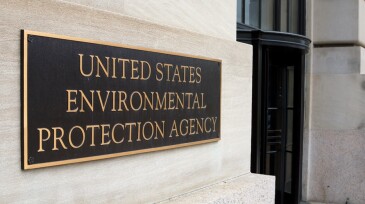
The US Environmental Protection Agency withdraws its legal basis for federal vehicle GHG standards, setting up potential court challenges.
-
A DNV report on decarbonization says the Middle East and North Africa region is expected to become the world’s largest hydrogen exporter by 2060 while maintaining a dominant position in global oil and gas markets.
-
The planned facility was designed to process 34 MMcf/D of associated gas into fully refined gasoline.
-
The newly named MTS brings together the full methane ecosystem, end to end—connecting technology, data, operations, and assurance across upstream, midstream, and beyond.
-
Monitoring on the ground is helping the industry shift from best estimates to hard data so it can bring the true emissions profile into focus.
-
Ongoing seismicity concerns and orphan well risks are pushing operators and regulators to explore alternatives for managing produced water.