HSE & Sustainability
The Pawnee Carbon Sequestration Project, which would use a repurposed well, is planned to capture and store up to 400,000 tonnes of carbon dioxide, with first injection targeted for early 2027.

DNV notes that energy and industrial process-related carbon emissions will have dropped by 2050 by only 44% from today’s level, not even halfway to the net-zero pledge envisioned by the Paris climate agreement.

SPE's new Asset Integrity Technical Section brings together industry experts to advance best practices in reliability engineering, asset integrity, risk reduction, and infrastructure performance. The global community will focus on the safe, reliable, and sustainable operation of energy assets across both traditional and emerging energy sectors.
-
 A Norwegian shipping company is eyeing smaller battery energy storage systems to design and develop greener heavy-lift jackups.
-
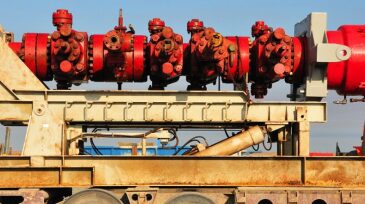
In 2013, a technology-development project began that digitized, automated, and applied analytics to blowout preventer pressure testing. As a result of the deployment of automated BOP testing, significant improvements have been achieved in process safety, personal safety, and rig-time savings.
-
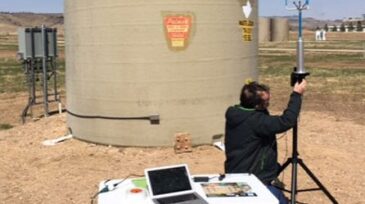
A new study confirms the success of a natural-gas leak-detection tool pioneered by Los Alamos National Laboratory scientists that uses sensors and machine learning to locate leak points at oil and gas fields, promising new automatic, affordable sampling across a vast natural gas infrastructure.
-
After a 3-year delay, the US has become the first nation in the world to formally withdraw from the Paris climate agreement.
-
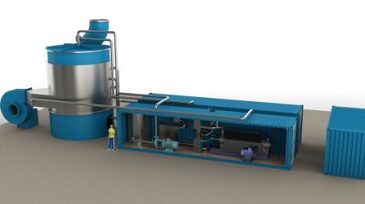
As part of the agreement, Baker Hughes will accelerate the development of Compact Carbon Capture’s technology, aiming for global commercial deployment.
-
Even though costs and market conditions are important for the development of the Vaca Muerta formation, regulation and trust in the fiscal and regulatory framework are fundamental to attract the required investments. And HSE rules are a key component in the regulatory framework.
-
To go big on capturing CO2, the oilfield service company is acquiring a company that specializes in going small.
-
As it reaches for net-zero emissions, the company said its operations offshore Norway remain central to its long-term strategy.
-
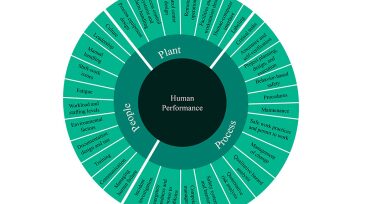
Competency in human factors is all too often focused on frontline operators, and the importance of human-factors skills among other groups is unappreciated. To be truly effective, human-factors principles have to be implemented throughout an organization.
-
Operators of unconventional plays face a conundrum—how to dispose of produced water economically without risking seismicity or aquifer contamination. A recent paper and virtual forum offer ideas for optimizing saltwater disposal.