HSE & Sustainability
The Pawnee Carbon Sequestration Project, which would use a repurposed well, is planned to capture and store up to 400,000 tonnes of carbon dioxide, with first injection targeted for early 2027.

DNV notes that energy and industrial process-related carbon emissions will have dropped by 2050 by only 44% from today’s level, not even halfway to the net-zero pledge envisioned by the Paris climate agreement.

SPE's new Asset Integrity Technical Section brings together industry experts to advance best practices in reliability engineering, asset integrity, risk reduction, and infrastructure performance. The global community will focus on the safe, reliable, and sustainable operation of energy assets across both traditional and emerging energy sectors.
-
 Rapid scale-up of CCUS projects is critical to achieving net-zero carbon emissions by 2050.
-
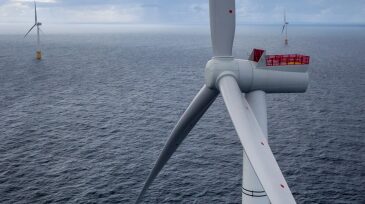
Offshore wind makes up less than 1% of the current energy mix, but analysts have it pegged as a potential trillion-dollar business in the near future. That growth presents an opportunity for operators to reduce costs and their carbon footprint through the electrification of their offshore platforms.
-
Field N is a complex heavy-oil field in the north of the Sultanate of Oman. The dynamic behavior of Field N is characterized by strong aquifer and is dominated by bottomwater drive.
-
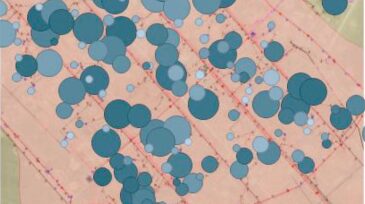
This paper presents a coupled 3D fluid-flow and geomechanics simulator developed to model induced seismicity resulting from wastewater injection.
-
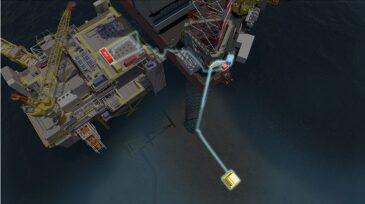
A subsea water-treatment system designed to leverage space availability, steady temperatures, lower bacteria levels, and other natural benefits of the seabed environment was successfully installed during pilot testing at the Ekofisk field offshore Norway.
-
A survey focusing on oil and gas executives found that only 52% said their organizations have traveler health and safety programs in place.
-
With at least 600,000 people killed or disabled each year, snakebites are a serious public health concern. For projects in Africa, Asia, and Latin America, the oil and gas industry needs to consider the risks to workers and its responsibility to support communities against this silent killer.
-
During the past decade, industries have made tremendous efforts in developing robust and effective systems in health, safety, and environment. Now, companies are called on to focus on process safety as well.
-
Large-scale subsea infrastructure is a feature of the world’s territorial seas, with much of it associated with oil and gas. Research on fish and fisheries interacting with subsea infrastructure, however, has been limited. This paper presents research on fish species associated with pipelines.
-
The US House’s subcommittee on Energy and Water Development and Related Agencies recently heard testimony on the Department of Energy’s role in addressing climate change.