HSE & Sustainability
The Pawnee Carbon Sequestration Project, which would use a repurposed well, is planned to capture and store up to 400,000 tonnes of carbon dioxide, with first injection targeted for early 2027.

DNV notes that energy and industrial process-related carbon emissions will have dropped by 2050 by only 44% from today’s level, not even halfway to the net-zero pledge envisioned by the Paris climate agreement.

SPE's new Asset Integrity Technical Section brings together industry experts to advance best practices in reliability engineering, asset integrity, risk reduction, and infrastructure performance. The global community will focus on the safe, reliable, and sustainable operation of energy assets across both traditional and emerging energy sectors.
-
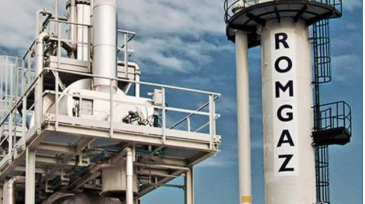
 Real-time wellhead monitoring aims to help Romania meet new EU methane emission regulations.
-
The supermajor’s Energy Outlook 2025 suggests geopolitical fragmentation could tilt the balance of the energy trilemma toward energy security and away from sustainability.
-
Iraq’s Gas Growth Integrated Project aims to increase electricity generation by capturing flare gas collected from three southern oil fields. A desalination project will use treated seawater to maintain well pressures.
-
The agency’s administrator said the program “does nothing to improve air quality.”
-
The project is expected to recover up to 300 MMscf/D of flared gas. Plans call for the recovered gas to be converted into treated dry gas, liquefied petroleum gas, and condensate for domestic use and export.
-
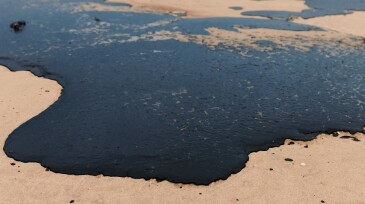
This research aims to harness the advanced capabilities of artificial intelligence, specifically deep learning and large language models, to develop a comprehensive system for detecting and explaining oil spills.
-
The International Energy Agency cited a wave of cancellations and persistent challenges for dropping its projection for annual production of low-emissions hydrogen by 2030 from 49 mtpa to 37 mtpa.
-
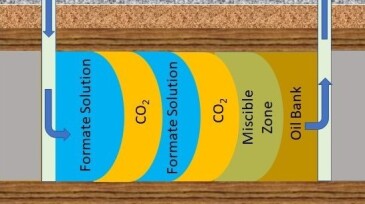
In a study that applied alternative carbon carrier technology to enhanced oil recovery (EOR) scenarios, researchers at The University of Texas at Austin found that the new method recovered up to 19.5% more oil and stored up to 17.5% more carbon than conventional EOR methods.
-
The spring Unified Agenda provides a snapshot of efforts to advance the president’s plans for fossil fuel exploration and infrastructure.
-
This paper presents a physics-informed machine learning method that enhances the accuracy of pressure transient analysis, predicting reservoir properties to enhance waste slurry injection and waste disposal.