HSE & Sustainability
This paper presents an approach to the identification, selection, and implementation of initiatives for sustainable water management, withdrawal reduction, and water valorization.

This paper presents an experiment investigating dissolution of basaltic primary minerals and conditions favorable for secondary phase formation under deep subsurface storage conditions.

This study aims to investigate the efficacy of chemical additives strontium chloride and barium hydroxide in accelerating CO₂ trapping mechanisms, their effect on dissolution of carbonate-bearing minerals, and resulting poroelastic changes in the host rock.
-
On 16 June 2017, the Alberta Oil Sands Advisory Group released its report Recommendations on Implementation of the Oil Sands Emissions Limit Established by the Alberta Climate Leadership Plan.
-
 Stressed-performance testing and performance indicators are among potential subjects identified as areas of potential interest in future human-factors research.
 -
Public acceptance is a major challenge for the siting of facilities. The offering of compensation to communities potentially helps to create the perception of a fairer distribution of local risks and nonlocal benefits. This may help to prevent or solve siting controversies.
-
BP has confirmed it will not reintroduce Super Puma Helicopters until the completion of an investigation into last year’s fatal crash.
-
Why is designing with human error in mind so critical? Consider that nearly 80% of all offshore facility accidents are caused by human errors, and 64% of these accidents happen during operations.
-
The Trump administration asked a federal appeals court on 7 July to allow it to delay enforcement of an Obama administration rule to limit methane pollution from oil and natural gas drilling.
-
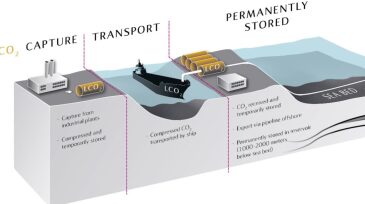
Gassnova has assigned Statoil to evaluate the development of carbon storage on the Norwegian continental shelf. This will be the first storage site in the world receiving carbon dioxide from several industrial sources.
-
A federal appeals court in Washington ruled on 3 July that the head of the Environmental Protection Agency (EPA) overstepped his authority in trying to delay implementation of an Obama administration rule requiring oil and gas companies to monitor and reduce methane leaks.
-
In the 4 months since he took office as the Environmental Protection Agency’s administrator, Scott Pruitt has moved to undo, delay, or otherwise block more than 30 environmental rules.
-
Anadarko Petroleum said late on 30 June that it has tested more than 4,000 active oil and gas lines and plugged another 2,400 inactive ones per a state order issued after a fatal home explosion in Firestone, Colorado, in April.