HSE & Sustainability
The Pawnee Carbon Sequestration Project, which would use a repurposed well, is planned to capture and store up to 400,000 tonnes of carbon dioxide, with first injection targeted for early 2027.

DNV notes that energy and industrial process-related carbon emissions will have dropped by 2050 by only 44% from today’s level, not even halfway to the net-zero pledge envisioned by the Paris climate agreement.

SPE's new Asset Integrity Technical Section brings together industry experts to advance best practices in reliability engineering, asset integrity, risk reduction, and infrastructure performance. The global community will focus on the safe, reliable, and sustainable operation of energy assets across both traditional and emerging energy sectors.
-
 The project would evaluate oil and gas extraction workers’ sleep, fatigue, and other related factors, as well as their relationship to industry-associated risks.
-
The $3.8-billion campaign will result in the delivery of power and decarbonization of ADNOC’s offshore production operations.
-
The CStore1 project aims to prove that floating storage and injection facilities are competitive with pipelines and fixed offshore infrastructure.
-
State lawmakers sent a bill to the governor that would require setbacks between new production sites and residential neighborhoods and other sensitive areas.
-
Proposed revisions to 2019 Well Control Rule aim to bolster safe and environmentally responsible energy operations.
-
The Biden administration seeks to cut the cost of enhanced geothermal systems by 90% by 2035.
-
The Rosmari-Marjoram project will be developed utilizing subsea wells and solar power.
-
This paper presents a summary of the results of a study of the potential for repurposing legacy oil and gas facilities in the Gulf of Mexico for uses in a blue economy.
-
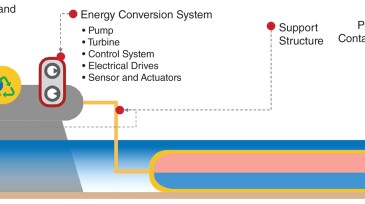
The authors of this paper describe a system that enables the storage of renewable power while allowing for the optimization of time and expenditure for decommissioning of existing infrastructure.
-
Many leaders commit to the aspiration of no harm to people, but they may need help on the substance and actions that will make a difference. The authors share their insights gained from decades of robust experience in safety culture and performance improvement and where it succeeds or fails.