HSE & Sustainability

Propelling a proposed CCS project from the drawing board to first carbon storage requires overcoming several hurdles.

The 2025 report confirms for the second year that the Appalachian Basin has the lowest methane intensity of any major oil and gas basin in the US.

The North Sea Transition Authority has advanced the UK’s plans for carbon storage by approving the drilling of a proposed appraisal well off the coast of Teesside.
-
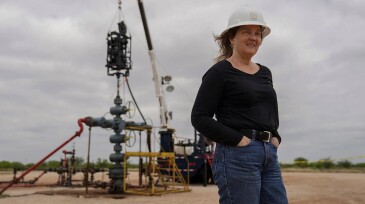
 Jesse Wood, Jason Brooks, and Ryan Jonnes are making a positive impact on the Permian Basin ecosystem, enabling ConocoPhillips to successfully balance responsible oil and gas development with land stewardship.
 -
Developing strong relationships within a leadership team is paramount for fostering collaboration, effective decision-making, and a positive organizational culture.
-
Texas has become an early hot spot for geothermal energy exploration as scores of former oil industry workers and executives are taking their knowledge to a new energy source.
-
In the pursuit of eliminating serious injuries, illness, and fatalities, Shell has transitioned from its 12 life-saving rules to the nine established by the International Association of Oil and Gas Producers. This paper explains the context of the Life-Saving Rules and why Shell decided to transition, providing an overview of how it managed the change, the effects so …
-
The project will implement two distinct carbon technologies aimed at capturing and storing carbon dioxide. Svante’s CEO Claude Letourneau describes his company’s solid-sorbent technology used in collaboration with Climeworks, one of the awarded companies.
-
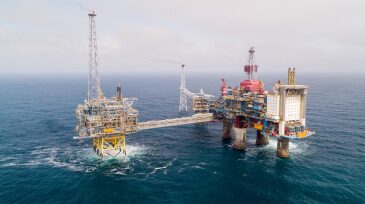
Electric conversion of these offshore platforms is expected to cut about 1.2 million tonnes of CO₂ emissions per year.
-
The US supermajor aims to speed the commercialization of a new liquid solvent that strips carbon dioxide from industrial flue gas.
-
Stakeholders in the UK offshore sector will be asked to commit to a set of principles to help the sector achieve the energy transition through digitalization.
-
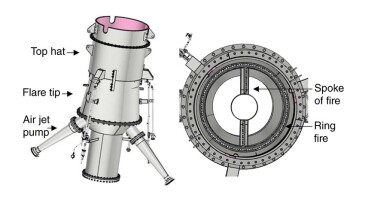
This paper describes development of technology with the capability to combust flare gases with a heating value up to 50% lower than existing flare-tip technology.
-
This paper describes a chemical-free process with a small footprint designed to capture exhaust from natural gas drive compressors and supporting gas-fueled production equipment.