HSE & Sustainability

The AI revolution isn't just digital. This article examines how geology underpins the convergence of AI, energy, carbon management, and the infrastructure powering frontier LLMs.

Winners of Alberta's Drilling Technology Challenge cover a range of technologies from robotics to enhance drilling rig safety to AI-enabled energy management, downhole sensing, well navigation, hybrid power systems, and geothermal energy.

Located along the North Sea, the Humber is expected to play a central role in the UK’s effort to achieve a net-zero emissions status by 2050.
-
 While innovative solutions are being examined for decarbonization, there is one topic that is rarely emphasized as a key driver in the path toward a more-sustainable future—brownfield optimization.
 -
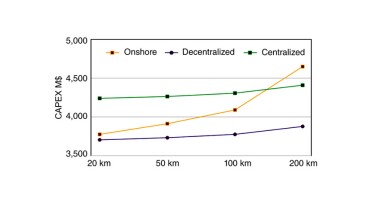
This paper is a summary of a study that covers through-life economics for producing green hydrogen from offshore fixed wind turbines.
-
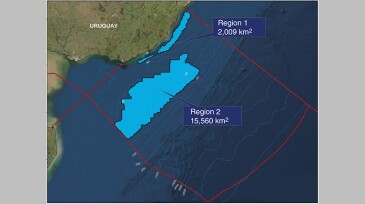
The authors of this paper present the results of an assessment of two regions in Uruguay suitable for bottom-fixed offshore wind technologies.
-
This paper presents a family of machine-learning-based reduced-order models trained on rigorous first-principle thermodynamic simulation results to extract physicochemical properties.
-
SponsoredImprove modeling accuracy and reduce the risk of unplanned downtime. By eliminating the need for multiple applications, complete more accurate comprehensive pressure safety studies faster.
-
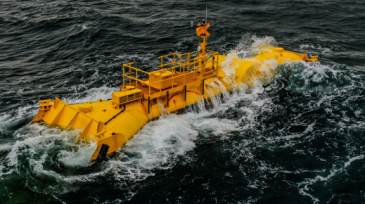
Wave power plus a subsea battery can be a reliable source for subsea operations, to a point.
-
Understanding the subsurface is crucial to the success of carbon capture and storage, and digital solutions are essential for an accurate analysis of the subsurface being considered.
-
Health, safety, and environment operations can be greatly enhanced by using artificial intelligence (AI) techniques on HSE data. One important aspect inherent in this process is the need to establish trust in the AI system among the users.
-
The Court of Appeals for the Eighth District of Texas ruled that the mineral lessee under an oil and gas lease owns the water extracted, not the surface property owner.
-
National oil companies and traditional upstream players are progressively focusing on cleaner and more environmentally friendly energy initiatives.