HSE & Sustainability

This paper presents laboratory-testing methods and evaluation criteria designed to improve understanding of both the origin and extent of formation damage associated with CO2 injection.

This work presents an evaluation for carbon capture, utilization, and storage projects in the UAE for two wells in a saline water aquifer with respect to caprock integrity and water sampling.

This work introduces an analytical model for nonisothermal CO2 injection that accounts for both Joule-Thomson cooling and interformation heat exchange.
-
 The Gulf of Mexico explorer is building off its offshore learnings to scoop up early carbon capture and sequestrations projects on the US Gulf Coast.
 -
Executives have become more concerned about climate over the past few months, according to a recent survey, but are in many cases picking the low-hanging fruit when it comes to demonstrating a real commitment to moving the needle. Their reasons may be valid.
-
SponsoredImprove decision making and reduce the uncertainty of CCS projects with accurate, detailed subsurface insights that help you estimate storage capacity, run play chance mapping, improve your injection strategy, and simulate carbon plumes over time.
-
The US government has made more than $1 billion available to qualified states. The program is part of the recently passed infrastructure law.
-
The web-based tool may be applied throughout an energy project's life cycle.
-
The facility will be a commercial-scale CO2 sequestration hub in the DJ Basin.
-
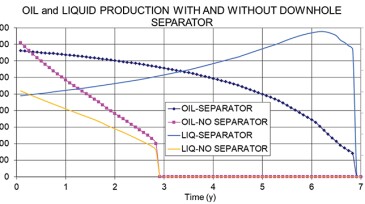
The paper presents a system for separation of water in downhole horizontal wells in which the water produced from the well is not lifted to the surface but reinjected into the reservoir.
-
The machine-learning techniques applied aim to deliver a prediction model based on both simulation and real-time field data. The model tracks and monitors system key performance indicators.
-
The new 165-MW facility uses flare gas from the adjacent Sarqala field to generate power for local use.
-
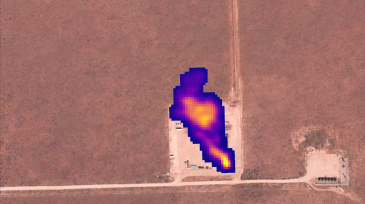
EDF and Carbon Mapper find more than two dozen facilities producing the same near-term climate pollution as about 500,000 passenger vehicles.