HSE & Sustainability

The AI revolution isn't just digital. This article examines how geology underpins the convergence of AI, energy, carbon management, and the infrastructure powering frontier LLMs.

Winners of Alberta's Drilling Technology Challenge cover a range of technologies from robotics to enhance drilling rig safety to AI-enabled energy management, downhole sensing, well navigation, hybrid power systems, and geothermal energy.

Located along the North Sea, the Humber is expected to play a central role in the UK’s effort to achieve a net-zero emissions status by 2050.
-
 In September, a technical workshop was held on the topic of injection-induced seismicity in Banff, Canada. It brought together industry and technical experts to discuss the increasingly important topic of induced seismicity associated with various injections during oil and gas activities.
 -
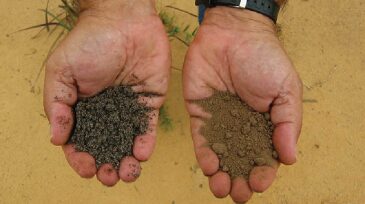
In the northeastern desert of Utah, a new type of oil sands extraction technology has been born. The company behind it claims the process is the most cost-effective and environmentally sound way to develop oil sands.
-
From 2009 to 2010, there was an increase in the number of well-control incidents on the Norwegian continental shelf reported to the Petroleum Safety Authority Norway (PSA).
-
The rapid development of shale formations over the past decade has led the United States to become the world’s undisputed leader in natural gas production.
-
The paper presents and discusses a solution for immersive training of industrial operators that allows experiencing the multifaceted scenarios of real-plant operations.
-
This paper describes functional water-treatment steps that target the most common removal of suspended solids and oil or condensate from Produced-water (PW) and flowback-water (FW) for recycling or disposal operations.
-
The Piceance basin in western Colorado is a long-term play expected to produce for another 20 years or more.
-
The demands for fresh water used in hydraulic-fracturing operations are placing constraints on water resources in some regions of the United States. Along with higher acquisition costs for fresh water, produced-water-disposal costs also have increased.
-
This paper presents the results of a laboratory investigation in which treatment processes were evaluated as treatment methods for produced water (PW) from different oil and gas fields.
-
While there is no one way to prevent all accidents from occurring, organizations can develop an effective safety culture that allows them to learn from their mistakes.