HSE & Sustainability

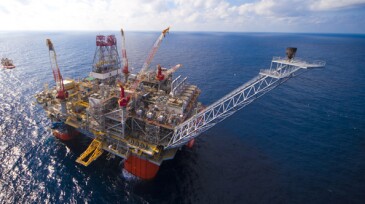
A handful of operators have cut costs, project timelines, and emissions by redeploying offshore infrastructure, but there are limited opportunities to replicate these success stories.

The challenge is to ensure that changes to major accident hazards are properly managed, whether the changes occur by adapting conventional industry operations to lower carbon or by introducing innovative technologies.

From AI-enabled walking rigs to subsea drones and autonomous inspection robots, robotics is rapidly moving from pilot projects to field deployment. The technology promises not only greater efficiency but also a fundamental shift in how the industry approaches safety and asset management.
-
 The Oil and Gas Climate Initiative says its members’ absolute upstream methane emissions were down 40% since 2017. That’s equivalent to taking more than 3 million cars off the road for a year.
 -
Webinar will examine how human factors can help with implementing automation in the oil and gas industry.
-
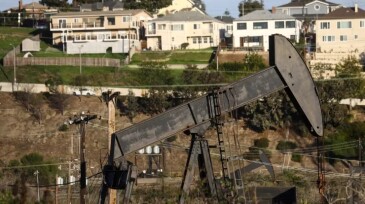
In a 12-0 vote, the Los Angeles City Council approved an ordinance that will immediately ban new oil extraction and shut down existing operations within 20 years. The historic decision comes after years of complaints by residents about how pollution from nearby drilling has caused them health issues.
-
A recently published study connects risky driving to long work hours, lengthy commutes, and insufficient sleep.
-
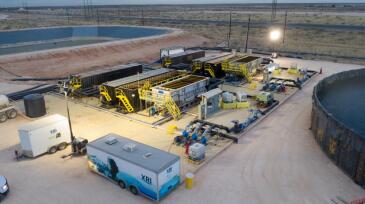
The Evolution Pipeline System will help to mitigate Permian Basin seismicity through produced water recycling and diversion of produced water from areas of high seismicity.
-
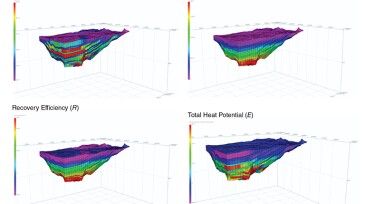
The authors of this paper discuss an integrated cloud-based work flow aimed at evaluating the cost-effectiveness of adopting geothermal production in low- to medium-enthalpy systems.
-
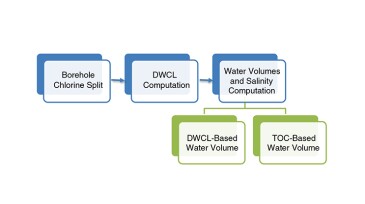
This paper provides a work flow based on research in two methodologies to estimate formation-water salinity, enhancing the quality of saturation evaluation for quick decision-making during logging operations.
-
This paper presents field cases of a rigless wireline logging technique that accurately locates sources of water production in cased wells with standalone sand screens in an offshore field in the Caspian Sea.
-
This paper presents case studies of how produced-water salinity data was used to transform the performance of two oil-producing fields in Nigeria.
-
The three papers chosen for publication share different approaches to chemically managing high-salinity produced water through commercially viable approaches. The identification of processes to treat high salinity levels and the approaches to alter and control the process make the papers not only good for discussion but also practical for all players, big and small.