HSE & Sustainability

A handful of operators have cut costs, project timelines, and emissions by redeploying offshore infrastructure, but there are limited opportunities to replicate these success stories.

The challenge is to ensure that changes to major accident hazards are properly managed, whether the changes occur by adapting conventional industry operations to lower carbon or by introducing innovative technologies.

From AI-enabled walking rigs to subsea drones and autonomous inspection robots, robotics is rapidly moving from pilot projects to field deployment. The technology promises not only greater efficiency but also a fundamental shift in how the industry approaches safety and asset management.
-
 Ryan Sloan, safety manager for Birchcliff Energy, explains how two separate tragedies spur him on to change the way workers think.
 -
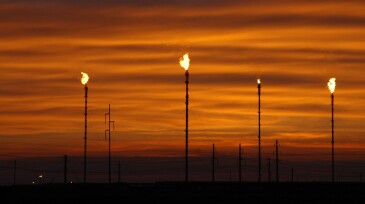
H2 Industries says it has developed a way to convert gas that normally would be flared into clean hydrogen and solid carbon at the oil field.
-
A multidisciplinary team of UCLA scientists and health care practitioners will conduct the health study, which will consist of five components—a health and health care use assessment, exposure assessment, community engagement, data management and statistical analysis, and overall program administration.
-
Nearly 100 authors contributed to The Lancet's annual report on climate change and health, which detailed how heat waves, drought, and air pollution are killing thousands.
-
Enhanced solutions take detection of hazardous, toxic gas to the next level.
-
This paper provides an overview of strategies, approaches, technologies, and tools that enable companies to prioritize social-good, natural processes and restoration of natural resources as part of business and operations.
-
A consortium of 20 organizations, REX-CO2, including research institutions, operators, and regulatory authorities, studied mature wells in two areas of the UK Continental Shelf. Subsurface data were evaluated and verified the wells’ potential suitability for both reuse and CO2 injection and storage.
-
The CO2 capture capacity of all CCS facilities under development increased 44% over the past 12 months, bringing the total capacity of those projects to 244 mtpa of CO2.
-
Data from member companies reveals an increased intensity in greenhouse-gas emissions for 2021. And, while flaring increased, too, long-term trends on that practice are clearly moving downward.
-
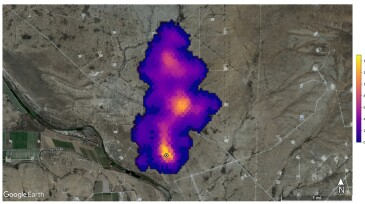
Built to help scientists understand how dust affects climate, the Earth Surface Mineral Dust Source Investigation can also pinpoint emissions of the potent greenhouse gas.