HSE & Sustainability

This paper presents laboratory-testing methods and evaluation criteria designed to improve understanding of both the origin and extent of formation damage associated with CO2 injection.

This work presents an evaluation for carbon capture, utilization, and storage projects in the UAE for two wells in a saline water aquifer with respect to caprock integrity and water sampling.

This work introduces an analytical model for nonisothermal CO2 injection that accounts for both Joule-Thomson cooling and interformation heat exchange.
-
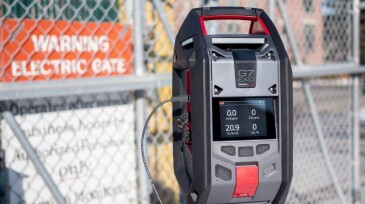
 Connected safety is growing, including in the oil patch. And it is tied to the wearable technology so prevalent today.
 -
Is seaweed farming a viable alternative to industrial-scale carbon capture and storage? This 3-year project off the coast of Norway aims to find out.
-
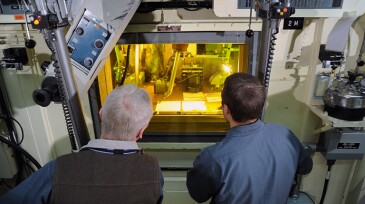
While small modular reactors open doors to affordable, carbon-free nuclear power, they also raise new questions over waste disposal.
-
It's not just about how much resource is left in the ground. The world's super basins will also need ample access to renewable energy and carbon storage in order to remain competitive in the upcoming decades.
-
Ipieca, the global oil and gas association for advancing environmental and social performance, has listed eight principles to which members must adhere to support UN initiatives, climate action, environmental responsibility, social performance, and sustainability.
-
A new funding opportunity is available for early-career researchers interested in safety and risk management issues related to offshore energy activities.
-
Using CO2 as the geothermal power fluid to generate electricity from low-temperature abandoned hydrocarbon wells can help reduce well costs and optimize energy production. In this paper, a previously developed coupled well/reservoir model is extended to study the effects of fluid properties on thermal output.
-
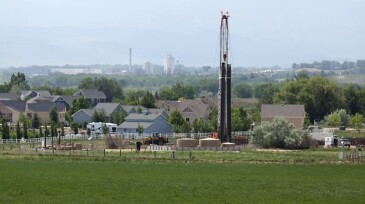
A group of public health experts from several universities and organizations urges adoption of a multilayered approach when developing policies to mitigate the effects of gas and oil production operations.
-
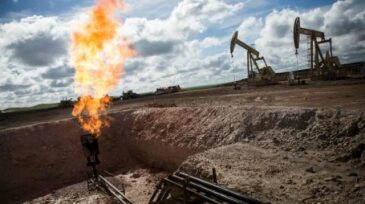
The Oil and Gas Methane Partnership 2.0 counts more than 80 upstream companies as members, representing more than 30% of global production.
-
The two organizations recently signed a letter of cooperation. The agreement creates an opportunity to accelerate the practical application of human factors in the energy industry and create a bridge between energy industry professionals and human factors experts.