HSE & Sustainability

Spain has granted permits covering a swath of the mountain range to Mantle8 for natural hydrogen and helium exploration a month after France granted the company similar permits.

Crude benchmarks spiked amid concerns that the US-Iran ceasefire is collapsing as commercial shipping comes under renewed attack.

This paper proposes a shift in the timing of risk modeling to much further back within the job life cycle, recognizing each function’s role in the mitigation of risk.
-
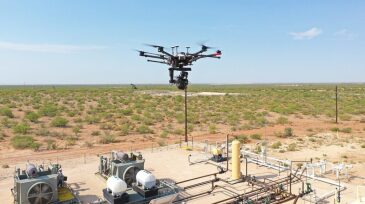
 After 2 years of testing, Shell is going all in on using high-flying technology to catch methane leaks to reduce its overall emissions to less than 1%.
 -
About 16% of US offshore production in the Gulf of Mexico remains offline after Hurricane Laura caused mass evacuations more than a week ago.
-
Winning innovators focused on environment, safety, and operational efficiency.
-
Advanced machine-learning methods combined with aspects of game theory are helping operators understand the drivers of water production and improve forecasting and economics in unconventional basins.
-
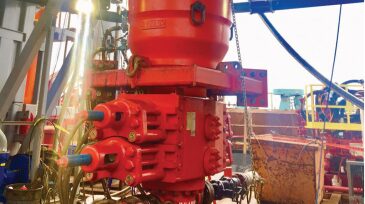
Discussed are real-world examples of the less often considered but valuable environmental benefits delivered via MPD.
-
The oil and gas sector has always been inherently risky. No matter how far mitigating efforts go or by how much technology improves, it is unlikely that risk will be removed entirely anytime soon. That being said, the sector has made huge strides in recent years to better protect those who serve it.
-
On 13 August 2020, EPA Administrator Andrew Wheeler announced two final rules related to the New Source Performance Standards (NSPS) for the oil and natural gas industry.
-
Lloyd’s Register has partnered with STC Global to create an artificial intelligence tool expected to provide insight from incident data captured by HSE functions but left untapped.
-
The company’s latest sustainability report highlights progress despite the disruption caused by the COVID-19 pandemic.
-
Williams Companies announced a near-term goal of a 56% absolute reduction from 2005 levels in greenhouse-gas emissions by 2030, aiming for net-zero carbon emissions by 2050. Why is this significant, and where can emissions be mitigated in the midstream natural-gas gathering and boosting segment?