HSE & Sustainability

This study explores the carbon-capture and mineralization potential of ultramafic rock powders when exposed to flue gases generated from combustion of crude oil and mesquite-derived charcoal.

This paper presents an approach for safe, efficient, and cost-effective legacy well reabandonment.

This paper introduces channel stacking, a novel and efficient methodology designed to significantly improve optical gas imaging-based leak detection.
-
 This article is the first in a Q&A series from the SPE Methane Emissions Management Technical Section (MEMTS) on methane intelligence and how oil and gas teams translate emissions data into credible decisions and measurable reductions.
 -
Fugro’s entry into the UK’s small modular reactor market follows its breakthrough in the US, where it secured a contract in February to perform a geoscience site investigation for the recommissioned Palisades Nuclear Power Plant in Michigan.
-
As COP30 wrapped up in Brazil, the country finds itself at an inflection point, positioned to deliver South America’s first carbon-dioxide injection by mid-2026.
-
This paper presents a robot integrated with a microcontroller that provides multiple functions to help with data logging, analysis, and reporting to identify hazards and improve safety protocols.
-
SPE member Silviu Livescu has been chosen to receive the award in recognition of his groundbreaking contributions to next-generation, low-enthalpy geothermal energy systems, which are enabling widespread, cost-effective building heating and cooling solutions.
-
Aurora Innovation and Detmar Logistics have inked a deal for 30 autonomous trucks that will begin hauling sand in the region next year.
-
The 14 available locations are estimated to be able to provide up to 2 gigatonnes of additional carbon-dioxide storage capacity.
-
Sustainability in reservoir management emerges not from standalone initiatives but from integrated, data-driven workflows, where shared models, closed-loop processes, and AI-enabled insights reduce fragmentation and make sustainable performance a natural outcome.
-
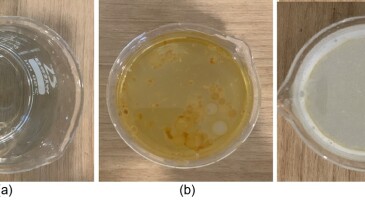
This study presents the development of a biodegradable surfactant developed using principles of environmentally friendly chemistry from natural sources. The goal is to develop an effective and environmentally friendly surfactant that can emulsify and disperse oil to reduce its effects on marine environments.
-
The authors state that issues faced by the Gorgon carbon capture and storage project primarily relate to risk and pressure management of the produced water from the Dupuy formation rather than from capture, transport, injection, and storage technologies.