HSE & Sustainability

LibertyStream has signed a feedstock agreement with Goodnight Midstream to support its first commercial lithium carbonate facility in North Dakota's Bakken, advancing plans to extract battery-grade lithium from produced water.

The transition away from materials that contain per- and polyfluoroalkyl substances (PFAS), co-called forever chemicals, creates an opportunity to preserve historical information. Information that appears to have little operational value today may later become important when organizations need to evaluate past PFAS use. Once that information is lost, recreating it may…

TotalEnergies signed off for 30% operated stakes in the Lang Lebah and B14 gas fields offshore Sarawak on the sidelines of ADIPEC in Abu Dhabi, while also highlighting methane-reduction partnerships in Angola, India, and Southeast Asia.
-
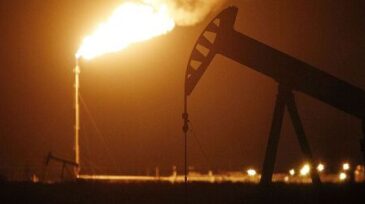
 The Texas Railroad Commission’s chairman has said the commission will look into policies to “drastically reduce” natural gas flaring from the state’s shale patch as investors become increasingly sensitive to climate-change concerns.
-
In almost all organizations, incidents are analyzed and lessons learned are identified. While many hard-won performance improvements have been delivered over the long term, achieving the next level of performance will require more than just incremental improvements.
-
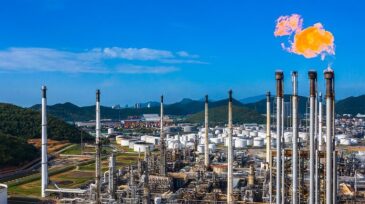
A billion-dollar fund will be available for innovations in flare minimization, venting elimination, fugitive-emissions reduction, and complete combustion.
-
Recommendations include changes to current forms and reports used to track flaring.
-
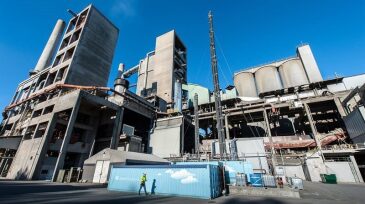
The cement industry is exploring carbon capture technology to reduce its carbon footprint.
-
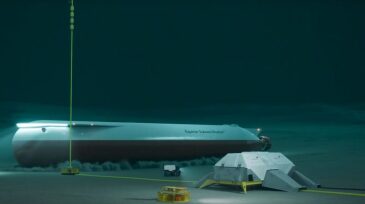
A new idea from Equinor calls for autonomous submarines to transport CO2 from the surface to the seabed. The Norwegian operator says the shuttles could also carry oil and water for injection.
-
Indonesia is home to numerous oil and gas fields, and upstream oil and gas activities are integral to the country's economic growth. Here are the key regulatory changes in response to the COVID-19 pandemic affecting Indonesia's oil and gas sector.
-
Water is precious, and it is a factor in every aspect of oil production in the Permian Basin. It is used to produce the hydrocarbons, and it is produced with them. In the often-arid region of the Permian, finding a balance between water production and use can be a challenge.
-
A recent test proved the feasibility of using LiDAR on remote-controlled drones to create 3D maps of the inside of tanks, increasing the safety and efficiency of inspections.
-
Machine learning enables fast, cost-effective, and accurate methane emissions detection in remote areas.