HSE & Sustainability

SPE’s newly renamed Safety Technical Section expands the reach of human factors by integrating safety, risk management, and system resilience expertise while preserving dedicated leadership and technical focus.

As drilling operations become increasingly digital, computer vision is emerging as a continuous safety layer that complements, not replaces, established safety practices. The challenge is no longer whether artificial intelligence can detect hazards, but how operators should deploy, integrate, and govern these systems to improve safety without adding operational comple…

New geothermal technical content and programming will highlight knowledge transfer among oil and gas and geothermal professionals.
-
 This paper presents the bioremediation of oil-contaminated soil by the application of microorganisms immobilized in coconut fiber.
 -
This paper presents a smart safety monitoring system to prevent accidents in environments with moving machinery at use on various global rigs.
-
The update increases the guidance’s focus on creating a just energy transition.
-
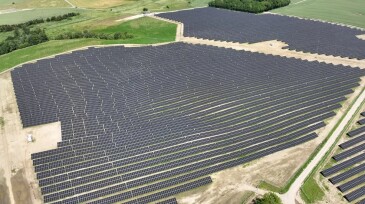
The facility has more than 100,000 solar panels and is capable of producing 65 MW.
-
Work by researchers at the University of Saskatchewan aims to advance the understanding of clathrate hydrates, crystal cages of ice that can trap gas and liquids.
-
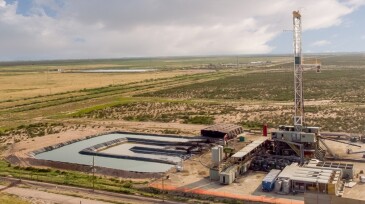
The justices ruled that the company holding the oil and gas lease also lays claim to the produced water. The ruling comes as more companies are seeking to turn a profit on what has long been considered a vexing waste stream.
-
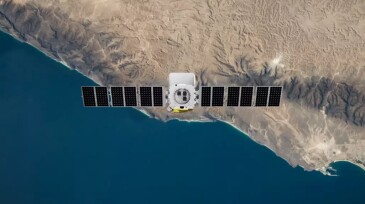
The nonprofit said the satellite likely is unrecoverable but that it will continue to analyze the data it had collected.
-
The CCUS eMentoring Program connects mentors and mentees, offering valuable insights, networking opportunities, and career advancement for both. Join the CCUS eMentorship program to share knowledge, grow together, and shape the future of CCUS.
-
Members of the International Association of Oil and Gas Producers reported 32 fatalities and a 26% jump in hours worked in 2024, which lowered the rate by 0.03 per million hours worked.
-
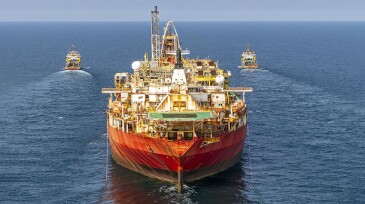
Shell became the first international company to operate producing fields offshore Brazil and the first to navigate the country’s complex and detailed decommissioning permitting process, which involved extensive environmental assessments, regulatory approvals, and coordinated stakeholder engagement.