HSE & Sustainability

LibertyStream has signed a feedstock agreement with Goodnight Midstream to support its first commercial lithium carbonate facility in North Dakota's Bakken, advancing plans to extract battery-grade lithium from produced water.

The transition away from materials that contain per- and polyfluoroalkyl substances (PFAS), co-called forever chemicals, creates an opportunity to preserve historical information. Information that appears to have little operational value today may later become important when organizations need to evaluate past PFAS use. Once that information is lost, recreating it may…

TotalEnergies signed off for 30% operated stakes in the Lang Lebah and B14 gas fields offshore Sarawak on the sidelines of ADIPEC in Abu Dhabi, while also highlighting methane-reduction partnerships in Angola, India, and Southeast Asia.
-
 Human factors may be a trendy term, but human habits are the targets in effecting change in behaviors related to performing work safely. Recent research around what habits are, how they are formed and changed and how they affect our lives has important implications for creating a safety culture.
-
In this study, a pilot plant with a capacity of 50 m3/d was used to conduct flotation, filtration, and adsorption trials for produced-water treatment at a crude-oil gathering facility.
-
The simplest way to measure return on investment for an offshore water treatment system is to determine whether using the system actually reduces the risk of paying a fine for violating water pollution laws.
-
Passive fire protection (PFP) has been used as a method to avoid/delay global collapse of offshore installations. Location of PFP is often based on simplistic assumptions, standards, guidance, and methods that do not always consider the real response of the structure to fire.
-
The demands for the fresh water used in many hydraulic fracturing operations are placing pressure on water sources in some regions of the United States. Because of the high volumes of water needed for fracturing and competing demands availability of fresh water has decreased and costs have grown.
-
This is the fifth article in a series covering water management in hydraulic fracturing in unconventional resources. The focus of this article is biological control. Additives to improve fracturing conditions can have negative effects on water treatment.
-
This paper discusses novel technologies for increasing the energy efficiency of offshore oil and gas platforms. Three case studies are in progress that are based on actual oil-producing platforms—two on the Norwegian Continental Shelf (NCS) and one in the Brazilian basin.
-
A recent webinar focused on hydrocyclones and their application for offshore oil and water separation. The discussion includes fundamental science, practical considerations, implementation and field experience.
-
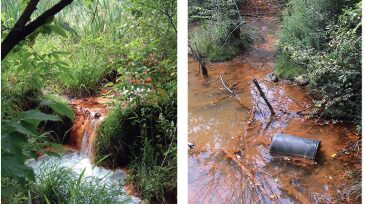
Polluted streams in Pennsylvania could provide a source of water for hydraulic fracturing and help prove a new way to clean up waterways contaminated by coal mine waste.
-
Over its 27-year history, the Center for Chemical Process Safety (CCPS) has observed that the first step toward implementing a strong process-safety-management program is obtaining top-management commitment.