HSE & Sustainability

The firm’s latest analysis puts the bulk of the blame on a fragmented supply chain.

Ultradeepwater prospects along the northern coast of Brazil could help offset decline in legacy basins, though permitting hurdles remain a wild card.

Sustainable energy continues to grow as a focus for reliable, affordable, and secure energy as seen from the past year of papers reviewed for this feature. Three primary areas are being reported on heavily: carbon use for enhanced oil recovery, geological hydrogen discovery, and critical minerals from the subsurface.
-
 The revisions to the Greenhouse Gas Reporting Program aim to bring greater transparency and accountability for methane emissions from oil and natural gas facilities.
 -
Offshore Energies UK and Xodus are launching an offshore nesting bird census to get a better understanding of how the animals use oil and gas structures in an effort to protect them.
-
For excellence to become a reality in any important area of operations, especially safety, there are five vital capacities organizations must develop, monitor, and synergize to adapt and thrive in a fast-paced and ever-changing world.
-
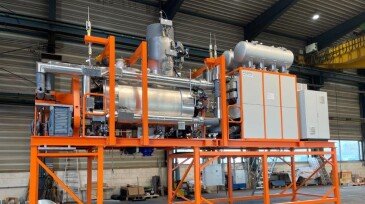
The volume reduction of naturally occurring radioactive material waste with indirectly heated vacuum distillation has been overlooked in research as a viable treatment option. This paper describes several key assessment factors that will allow a more detailed understanding of the benefits of that option.
-
Leadership engagement is needed to drive health and safety performance in a world of work in an increasing state of flux, according to a survey conducted by ERM.
-
SponsoredThe oil and gas industry makes up 40% of all anthropogenic methane emissions because of leaks at the wellsite. Fortunately, the well pad is often where methane emissions are easiest to address through a mitigation strategy of optimized maintenance and process control—all enabled by instrumentation insight.
-
Heightened focus on methane emissions management spurs a new conceptual framework to aid in determining the duration of detected methane emissions, data that may be useful to stakeholders responsible for measurement-informed emission protocols.
-
The health, safety, and environment (HSE) discipline is one of the broadest in SPE, from the perspectives of both its scope and its cross-discipline impact. As JPT celebrates 75 years, former HSE Technical Director Roland Moreau examines some of the defining moments in the history of HSE in the industry, the growth of the discipline, and the challenges it still faces.
-
At COP28, more than 50 oil and gas companies took a historic step toward decarbonization by launching the Oil & Gas Decarbonization Charter. This article explores the importance of this effort, the opportunities available to the industry to reduce its Scope 1 and 2 emissions, and the key technologies needed to achieve the net-zero goal.
-
This paper presents an evaluation of geopolymer cementing for use in oil and gas wells, specifically in the primary cementing of liner strings in the Permian Basin.