LNG

TotalEnergies signed off for 30% operated stakes in the Lang Lebah and B14 gas fields offshore Sarawak on the sidelines of ADIPEC in Abu Dhabi, while also highlighting methane-reduction partnerships in Angola, India, and Southeast Asia.

New rules requiring Mozambique’s LNG industry to supply 25% of production to the domestic market could stabilize gas deliveries to South Africa’s Secunda industrial center as the Pande and Temane gas fields near depletion.

This paper presents the large-scale deployment and operational integration of an advanced, automated rheometer in the Ghawar gas field, one of the world’s most prolific and technically complex hydrocarbon developments.
-
 The paper describes a multientry multistage fracturing technology developed to enable longer laterals, increase stage counts, improve stimulation efficiencies, and derisk operations.
-
US EIA data show exports rising from 0.5 Bcf/D in 2016 to 15 Bcf/D in 2025, positioning the US as the world’s largest LNG exporter with further capacity growth expected next year.
-
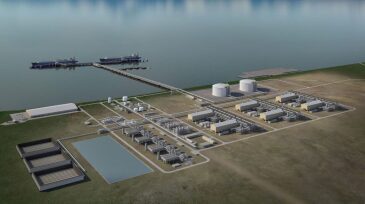
Suspended by force majeure since the spring of 2021, work on the Mozambique LNG project has restarted with over 4,000 workers now engaged onshore and offshore to meet a 2029 deadline for first LNG.
-
Despite a 2.8% drop in liquefied natural gas exports in 2025 because of lost market share in China, Australia anticipates a 2026 rebound as new North West Shelf capacity comes online. Meanwhile, East Coast operators brace for a tsunami of wells entering the decommissioning pipeline and potential energy shortfalls necessitating LNG imports.
-
A series of major advances will move Phase One of the Alaska LNG Project from the development phase into execution.
-
The expansion project by QatarEnergy is expected to increase LNG production capacity to 142 mtpa when it goes online.
-
The vessel, ordered by Eni, is expected to double LNG production at Eni’s project offshore Mozambique to 7 mtpa when it goes online in 2028.
-
Woodside’s $12-billion gas project offshore Western Australia is expected to produce up to 8 mtpa once it’s complete.
-
This paper describes a data-driven well-management strategy that optimizes condensate recovery while preserving well productivity.
-
This paper details a data-driven methodology applied in Indonesia to enhance flare-emission visibility and enable targeted reduction strategies by integrating real-time process data with engineering models.