Asset Management

Two new US Department of Energy funding programs focus on improving shale recovery, mitigating produced-water risks, managing sour gas, and enhancing facility efficiency.

Winners of Alberta's Drilling Technology Challenge cover a range of technologies from robotics to enhance drilling rig safety to AI-enabled energy management, downhole sensing, well navigation, hybrid power systems, and geothermal energy.

The transaction broadens the company's North Sea footprint with long-life assets that boost production and reserves.
-
 A sharp decline in oil prices is pushing oil and gas companies to innovate to increase efficiency and prepare to meet the world’s long-term energy needs, panelists said at the International Petroleum Technology Conference (IPTC) held in Kuala Lumpur, Malaysia, in December.
 -
Expectations of continued USD 100/bbl of oil were shattered by a sharp price drop last year that eventually halved the prices of benchmark crudes. Prices were still sinking at the start of the year to lows not seen since 2009 due to a global oversupply of oil.
-
A Cold War technology invented to stealthily guide the United States Navy’s nuclear submarine fleet is now serving a much more peaceful purpose: aiding in the search for oil and gas deposits.
-
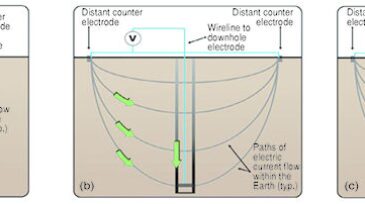
Add a new possible use for downhole casing: It can serve as broadcast antennae.
-
A few months ago while at lunch with a project team, I heard an engineer lament about how much more difficult it is to execute a project now than in years past.
-
SPE’s technical directors are focused on problems that require working outside the bounds of their discipline.
-
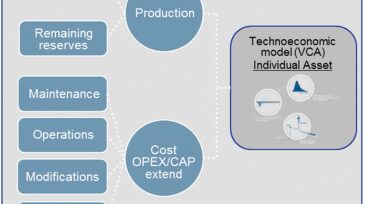
The number of aging offshore facilities in the Asia Pacific region is increasing. The decision to extend the service life of an offshore asset is made on the basis of detailed technical analyses combined with detailed economical evaluations.
-
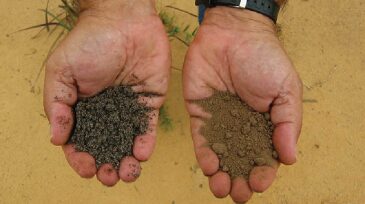
In the northeastern desert of Utah, a new type of oil sands extraction technology has been born. The company behind it claims the process is the most cost-effective and environmentally sound way to develop oil sands.
-
This paper describes a case study in which four reservoir models were coupled with a production-network model, with the objectives of maximizing recovery factors, identifying operational problems, and evaluating water-production effects.
-
The realization that we should not look at any individual aspect of how to estimate unconventional reserves and resources properly without considering its place in the project life cycle reflects a maturity within the industry.