Asset Management

The transition away from materials that contain per- and polyfluoroalkyl substances (PFAS), co-called forever chemicals, creates an opportunity to preserve historical information. Information that appears to have little operational value today may later become important when organizations need to evaluate past PFAS use. Once that information is lost, recreating it may…

US buyers are looking for extra shale inventory and added another $18 billion in purchases in October alone.

TotalEnergies signed off for 30% operated stakes in the Lang Lebah and B14 gas fields offshore Sarawak on the sidelines of ADIPEC in Abu Dhabi, while also highlighting methane-reduction partnerships in Angola, India, and Southeast Asia.
-
 Woodside Energy's Trion field offshore Mexico features a four-column semisubmersible FPU with a production capacity of 100,000 BOPD.
-
Houston-based independents will combine to form a company with a production total above 500,000 BOE/D and valued at $21 billion.
-
The producer’s Lime Rock and Venice discoveries were brought on stream in late December.
-
The facility is destined for Shell’s deepwater Gulf of Mexico development.
-
Located in the National Petroleum Reserve in Alaska, the Willow project is estimated to produce 180,000 BOPD at its peak.
-
Energy storage is essential to a clean electricity grid, but aggressive decarbonization goals require development of long-duration energy storage technologies.
-
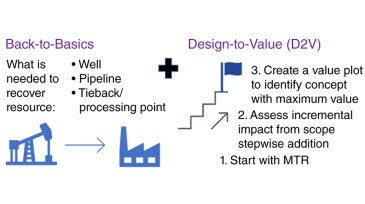
This paper describes a revamped methodology for field-development strategy formulation, particularly for marginal hydrocarbon resources, by shifting the mindset toward designing with an aim to value in order to improve project viability.
-
This paper adds to ongoing research in hydrogen storage, focusing on efficient extraction of hydrogen to be stored potentially in depleted unconventional formations.
-
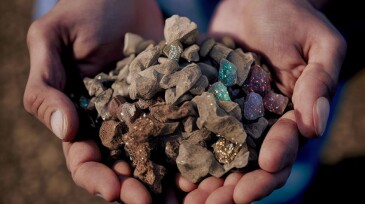
The increasing demand for critical minerals—the building blocks of an electrified future—is creating opportunities for the oil and gas industry to apply its extensive knowledge, tools, and data to help meet the demand.
-
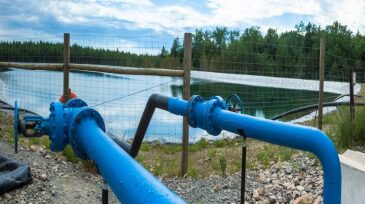
Researchers at Texas A&M University have developed a method of refining "liquid gold" for valuable critical minerals using what many consider traditional waste products: produced water and carbon dioxide.