Asset Management

The Seismos full-scale research center opens to industry, universities, and national laboratories, advancing acoustic sensing across upstream energy, pipelines, critical infrastructure, and national security.

The Society’s archive of technical papers, maps, figures, and geological data sets will be integrated into the GIX platform, enabling geoscientists to query AI agents about exploration opportunities within specific geographic regions while combining historical research with public data, proprietary information, and advanced analytics.

With $9.6 billion in assets in the market, the focus is shifting from who is exiting Southeast Asia to who is positioning for entry through acquisition, according to Rystad Energy.
-
 The distressed shale pioneer will wipe away nearly $7 billion in debt and is likely to make major asset sales as it attempts to restructure itself into a profitable business.
 -
World energy is at a “pivotal moment,” says BP CEO in annual statistical review, which reveals contrasts, challenges in energy consumption, production, and emissions.
-
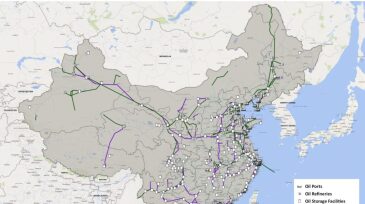
Designed to be a “living” map, it focuses on the largest fixed infrastructure for crude oil and refined products such as trunk pipelines, refineries, and storage facilities.
-
Lingering low oil prices are forcing Occidental to mark down the value of its oil and gas assets again, making the burden of its staggering debt look even greater.
-
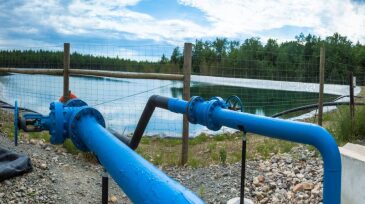
A recovery in the energy industry is key to the oilfield water sector in the Permian. But the industry must address issues such as further research, regulatory changes, and technology.
-
The good news is 95% of the oil companies in Texas are expected to survive 2020, which means there is a lot of bad news to endure.
-
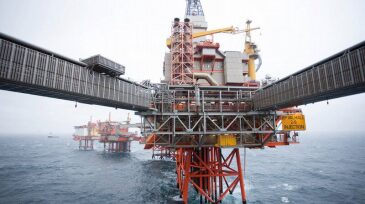
With contracts canceled and pressures mounting, offshore oil drillers struggle to stay afloat.
-
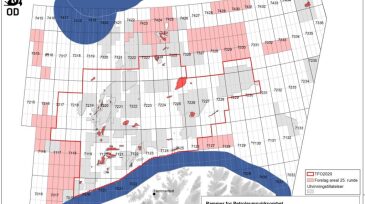
A new licensing round will open up 136 blocks in the Arctic Barents Sea.
-
The $20.7-billion agreement is the single-largest energy infrastructure investment in the region.
-
COVID-19 will fundamentally affect the world’s energy systems and the pace and direction of global transition. The WEC identified a three-stage, respond-rebuild-recreate model being adopted by energy companies in response to the pandemic.