Asset Management

Known as Arena, the collaboration aims to improve decision-making across increasingly complex reservoirs and growing volumes of subsurface data.

Robotic and autonomous systems are transforming energy operations, but their full value emerges only when paired with data science, engineering analytics, and AI/ML to turn data into decisions. The transition of the SPE Robotic & Autonomous Systems Technical Section into the SPE Data Science & Engineering Analytics Technical Section helps bridge this critical technolo…

Trafigura will purchase 100,000 metric tons of battery-grade lithium products under a decade-long take-or-pay contract valued at over $2 billion.
-
 ExxonMobil LNG Asia Pacific will purchase 1.0 mtpa from Rio Grande LNG plant over a 20-year period.
 -
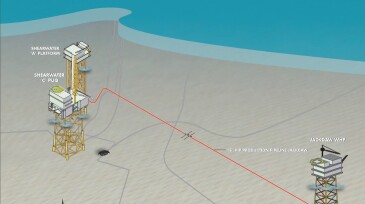
Schlumberger, Subsea 7 alliance will supply and install a subsea boosting system in GOM field.
-
Second-quarter earnings for the three biggest oilfield service companies arrived with some new takes on where the market is headed.
-
First production from the UK North Sea gas field is expected in the second half of 2025.
-
While small modular reactors open doors to affordable, carbon-free nuclear power, they also raise new questions over waste disposal.
-
A new report shows that the offshore oil and gas sector is cautiously getting back to work, with some projects delayed and while EPC awards for sanctioned projects remain robust.
-
Partnerships flourish in offshore wind, while Equinor expands its renewables drive and solar companies in the US come together to shore up the supply chain ahead of increased demand.
-
For those with an oil company to sell, an oil price of $100/bbl is not what it used to be.
-
Using CO2 as the geothermal power fluid to generate electricity from low-temperature abandoned hydrocarbon wells can help reduce well costs and optimize energy production. In this paper, a previously developed coupled well/reservoir model is extended to study the effects of fluid properties on thermal output.
-
The Oil and Gas Methane Partnership 2.0 counts more than 80 upstream companies as members, representing more than 30% of global production.