Asset Management

The GRMS system of standardization and classification for geothermal resources, led by a coalition of stakeholders in collaboration with Project InnerSpace and the Society of Petroleum Engineers, will be published in November.

Argentina’s President Javier Milei met with TotalEnergies CEO Patrick Pouyanné and Eni CEO Claudio Descalzi in Paris to discuss Argentina’s energy sector, including projects linked to the Vaca Muerta shale formation and the development of the Argentina LNG export project.

Known as Arena, the collaboration aims to improve decision-making across increasingly complex reservoirs and growing volumes of subsurface data.
-
 More than 13,500 oil and gas professionals gathered at SPE’s Annual Technical Conference and Exhibition (ATCE) on 28–30 September in Houston, making it the second highest-attended ATCE.
-
In SPE's annual salary survey, average total compensation dropped back to 2013 levels after an increase last year. Nonetheless, more than half of respondents reported that their base pay increased in 2015.
-
National oil companies (NOCs) in the Middle East plan to boost their collaboration efforts in technology applications through a global industry trade organization’s initiative.
-
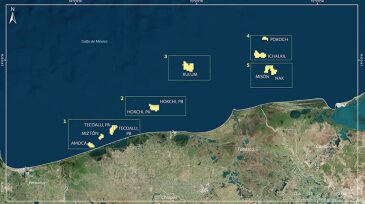
Mexico’s second oil and gas lease auction has been deemed a success after three out of five shallow-water blocks were awarded in September. The awarded areas contain an estimated 236 million bbl of oil and 190 Bcf of gas.
-
The oil price cannot be USD 20 for any long period because we cannot produce enough oil to feed the world at that price. But if the price of oil is based on supply and demand, how could it fall to USD 20 at any point in time?
-
After offering incentives to international operators last year to drill in Argentina, the country still has more work to do in attracting foreign investment.
-
Oil markets displayed their manic-depressive side in August, dropping to around USD 40/bbl early and jumping back to near USD 50/bbl at month’s end.
-
While some standardization makes sense, it is important for the industry to implement cost-effective supply chain practices to efficiently deliver customization when it improves efficiency and increases production.
-
Sustained low oil prices have not yet had a significant effect on many universities’ research and development programs. For now, money allocated by the oil and gas industry in previous years is still available for many institutions.
-
The chief technology officer tells why he is optimistic about the current oil price situation, how the market downturn could be an ideal opportunity for innovation and slashing costs, and what major technology trends will be expected in the near future.