Onshore/Offshore Facilities

While Uzbekistan has seen a significant drop in flaring, methane leaks from deteriorating infrastructure continue to reveal themselves to satellites in space.

Analysts weigh near‑term risks for Middle East oil and gas producers after a tentative 2‑week ceasefire between the US‑Israeli coalition and Iran.

The North Sea project, which is sending production to the nearby Ivar Aasen platform, came online 9 months ahead of schedule.
-
 Companies are looking to plan smaller LNG plants, which may be COVID-proof, but the industry still faces a 100-mtpa shortfall in the mid-2020s.
 -
There has been an increased number of major accidents at industrial facilities globally as many have come back online post-lockdown.
-
New research released by Columbia University's Center on Global Energy Policy and Resources for the Future estimates that a federal program to plug roughly half a million abandoned and so-called "orphaned" oil and gas wells could create as many as 120,000 jobs and reduce pollution.
-
The specification defines a minimum common set of requirements for the procurement of subsea pipeline valves.
-
The company deferred three of four pipelines as it continues to push toward final investment decision.
-
To navigate the new business environment, the P&F community must advance promising concepts through the feasibility, design optimization, and/or pilot testing phase into the detailed design, execution, commercialization, and optimization phases.
-
The Cameron LNG project completed its final train this month, but other LNG projects such as Calcasieu Pass LNG, Driftwood LNG, and Lake Charles LNG face difficulties during the economic downturn.
-
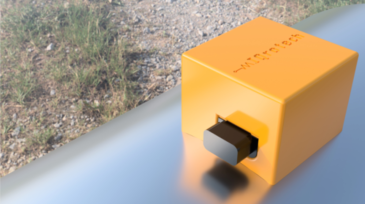
A volatile market, and a shift to more remote operations during the global pandemic has been a catalyst for demand for mIQroTech’s leak-detection technology
-
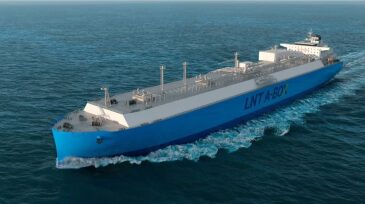
The LNG A-Box containment system is designed for LNG carriers to serve smaller terminals, where larger ships are not feasible.
-
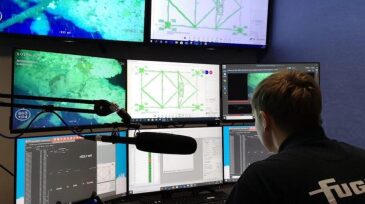
The fully remote inspection was conducted with an ROV to increase worker safety and security and reduce environmental exposure on an offshore platform.