Onshore/Offshore Facilities

The long-term outlook analysis says a potential shift toward new construction could push 2026 production 3% above 2025 levels.

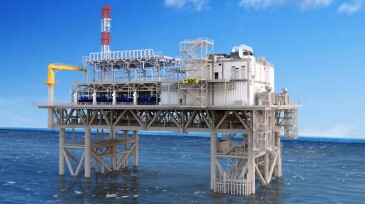
This paper identifies opportunities and risks associated with repurposing an offshore oil and gas platform for green hydrogen production. Various technical scenarios were investigated for the case study platform, and their profitability was determined using economic calculations. In addition, all the submodels were compared with standard decommissioning costs for reco…

This paper presents a flexible, highly cost- and energy-efficient method of gas separation and CO₂ capture from many different gas mixtures with a large range of CO₂ concentrations.
-
 JERA joins Tokyo Gas as a player in the Haynesville as Japan targets the US Gulf Coast as key to building global LNG supply chains.
 -
The DeepOcean-lead joint industry project aims to advance commercialization of a new patented technology that heats pipeline systems deployed in deepwater where flow assurance can be a challenge.
-
BP’s new electric gas compression platform at Shah Deniz, Azerbaijan’s largest natural gas producer, is expected to sustain exports to Europe even as the field enters decline.
-
Liquefied natural gas (LNG) exporters in the US plan to more than double the country’s liquefaction capacity by adding an estimated 13.9 Bcf/D between 2025 and 2029.
-
SPE Technical Director Hamad Al-Marri shares his outlook of the oil and gas production facilities landscape as it stands on the cusp of a significant transformation. The demand for oil and gas will continue to exist, but the industry will need to adapt to a new reality.
-
Citing a lack of profitability, the Norwegian major has chosen to end its electrification efforts in the Halten and Snorre areas.
-
The joint venture with Nigeria's Sunlink Energies aims to deliver first production before 2030.
-
The companies say they plan to use AI to unlock value from terabytes of data upstream and across FPSO operations.
-
Two new wells add 15,000 BOE/D of peak capacity to the London-based supermajor's North Sea production profile.
-
Analysts say UK output growth could offset emissions associated with the production of imported LNG while supporting energy security.