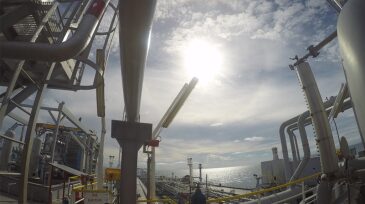
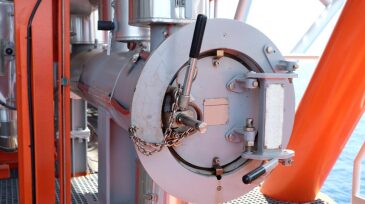
Onshore/Offshore Facilities

The Absheron gas field expansion will supply additional natural gas to Azerbaijan’s domestic market and support its export commitments to Turkey, allowing Baku to stay focused on meeting its gas export obligations to Europe.
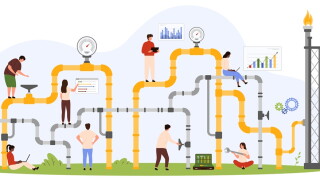
A credible custody-transfer record depends on far more than the accuracy of a single meter. It is the product of an integrated measurement chain. While meter performance supports measurement-system integrity, commercial confidence also depends on traceability, governance, and authorization.

Despite significant progress in capturing associated gas for domestic use, Iraq remains the world’s third-largest gas-flaring country as it aims for higher oil and gas production targets.
-
 A team of oil and gas consultancy companies have formed a collaborative program aimed at offering integrated support for operators looking to retire redundant facilities without in-house overhead.
 -
Since the recent oil price downturn, the offshore MMO market has witnessed a significant decline in global expenditure. The most severe decline in total regional expenditure is anticipated to occur in North America, with modifications expenditure forecast to drop by 56% between 2014 and 2016.
-
When the underlying cause of flow-related issues on offshore projects is unknown, an expert said an investigation of fluid flow behavior based on an understanding of the first principles of flow assurance is necessary.
-
Natural-gas-infrastructure reliability is critical for the energy sector. When capitalizing on old pipelines to transport natural gas, operators run the risk of partial blockage. In this study, the authors develop a multirate test method to detect partial blockage in a gas pipeline.
-
Looped lines are used to reduce pressure drop and increase flow capacity, but information on the flow behavior or predictive methods are not available for these systems.
-
Subsea tieback of a new field to an existing offshore production facility is one option to minimize development costs.
-
Lessons learned in debottlenecking a “dirty” triethylene glycol contactor at the ExxonMobil Upstream Research Company’s LaBarge Black Canyon Facility in Wyoming highlight the results of work performed between 2001 and 2004.
-
This paper describes a new direct electrical heating method in flexible-pipe systems. The method effectively expands the operational envelope of flexible unbonded pipes with greater control of hydrate plugs and wax precipitation by distributed heating along the entire pipe length,
-
Medium-voltage electric heating systems offer reduced installation cost and increasing efficiency for multimegawatt oil and gas heating applications compared with low-voltage systems. For offshore applications, the systems offer the added benefit of both space and weight reductions.
-
Thermoplastic composite pipe (TCP) is a spoolable, fully bonded pipe with glass or carbon-fiber reinforcements. While most often used in deep water, the combination of a solid wall, spoolability, and corrosion resistance makes TCP attractive for production-flowlines in shallow water also.