Onshore/Offshore Facilities

Despite significant progress in capturing associated gas for domestic use, Iraq remains the world’s third-largest gas-flaring country as it aims for higher oil and gas production targets.

The 2026 Upstream Scale Guidelines establish a common workflow for field measurements, scale modeling, and risk assessment to support more consistent operational decisions.

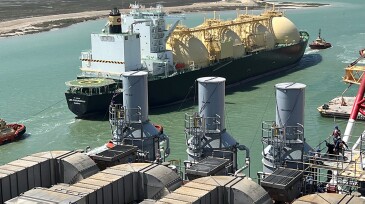
Shell has reached FID on LNG Canada Phase 2, a major expansion that will double the Kitimat facility’s LNG export capacity to 28 mtpa and strengthen long-term supply to growing Asian markets.
-
 This paper compiles recommendations from a broad range of sources into a single document to aid future intelligent-completion installations and operations.
 -
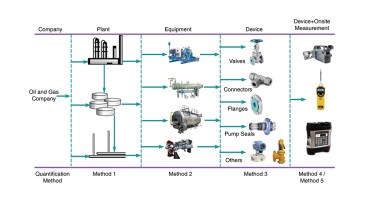
The authors of this paper describe an initiative taken to measure baseline data for methane emission for gas-processing facilities and gas-transmission and regasification units by using accurate tools and methodologies for detection and quantification.
-
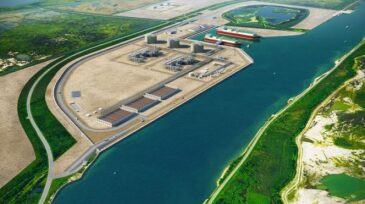
A series of new liquefaction projects along the US Gulf Coast is cutting through industry headwinds and moving toward final investment decisions.
-
The proposed transaction also would be the first step in establishing a joint venture between BP and ADNOC.
-
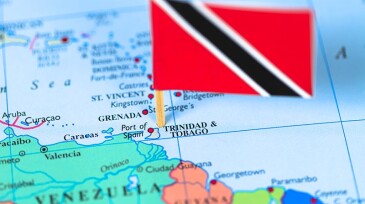
The $1.8-billion project will add crucial gas supplies to fuel Trinidad and Tobago's LNG export capabilities.
-
A total of 15 companies, including seven small businesses, were recognized this year for their breakthrough hardware and software technologies.
-
A high-resolution acoustic downhole evaluation system nabs top award for 2023.
-
The contract was awarded by Bechtel to Baker Hughes for project's key liquefaction systems.
-
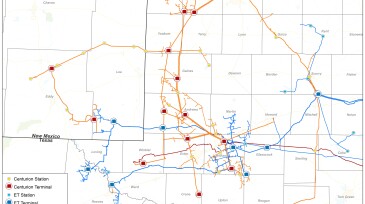
The acquisition will enable Energy Transfer to send more barrels of Permian crude to oil hub at Cushing, Oklahoma.
-
With mobilization in China normalizing, new Wood Mackenzie analysis expects the country to account for almost 40% of global growth in oil demand this year.