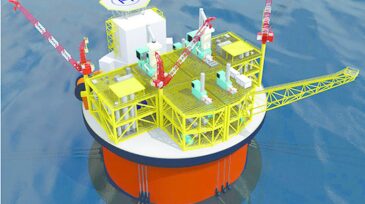
Onshore/Offshore Facilities

The deal includes Waygate’s inspection portfolios and is expected to close later this year.

While Uzbekistan has seen a significant drop in flaring, methane leaks from deteriorating infrastructure continue to reveal themselves to satellites in space.

Analysts weigh near‑term risks for Middle East oil and gas producers after a tentative 2‑week ceasefire between the US‑Israeli coalition and Iran.
-
 The accurate and precise analysis of scale inhibitors—in conjunction with other field data such as ion analysis, total suspended solids, and productivity index—plays an important role in making decisions about the efficiency of scale squeeze and continuous chemical injection treatments.
 -
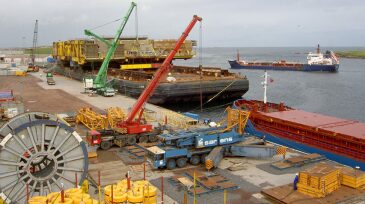
Heavy-lift vessels aim for opportunities in decommissioning in UK North Sea and Norway and offshore wind projects.
-
Gazprom’s third pipeline to course through the Arctic further decreases Russia’s dependence on using Eastern European countries as thoroughfares to export its gas to markets in Western Europe.
-
A former technical manager with Petrobras discusses the development of the company’s flow assurance philosophies and strategies.
-
As the boom of the 1970s and 1980s makes way for the first tranche of major decommissioning projects, the market for abandonment and decommissioning has grown over the past 5 years. To deliver these projects in a safe and economic way, decommissioning needs to be accepted as a serious challenge.
-
Mexico’s long awaited deepwater auction saw 8 out of 10 blocks awarded but there remains plenty of work to be done before activity ramps up, including finalizing regulatory rules, upgrading ports, and optimizing the bid rules for future auctions.
-
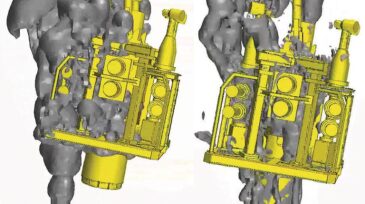
Developing a well-specific subsea-capping contingency plan involves assessing the feasibility of deploying a capping stack from a floating vessel, determining the weight and stability, and performing dynamic-flow simulations of closing the capping stack outlets.
-
Current methods for external inspection of floating assets on station use divers or remotely operated vehicles (ROVs), but these methods incur high safety, people-on-board (POB), and cost penalties. New methods to eliminate diving are being developed.
-
This month's feature on Offshore Facilities is drawn from more than 200 papers presented at SPE events over the past year.
-
This paper describes a split-process FLNG design where primary production and gas-treatment functions are provided on a host platform while liquefaction occurs on a separate vessel.