Onshore/Offshore Facilities

The long-term outlook analysis says a potential shift toward new construction could push 2026 production 3% above 2025 levels.

This paper identifies opportunities and risks associated with repurposing an offshore oil and gas platform for green hydrogen production. Various technical scenarios were investigated for the case study platform, and their profitability was determined using economic calculations. In addition, all the submodels were compared with standard decommissioning costs for reco…

This paper presents a flexible, highly cost- and energy-efficient method of gas separation and CO₂ capture from many different gas mixtures with a large range of CO₂ concentrations.
-
 The impact of orphan wells, both on the environment and on tightening budgets, is a growing concern in the industry. Boom times result in a vast uptick in wells drilled. In bust times, when companies disappear, the liability outlook for these probes gets murky and federal and state governments start looking for answers.
 -
The authors present a monoethylene-glycol-sensing system and validate it in a specially constructed flow loop.
-
The paper highlights key learnings in well and reservoir surveillance analysis and optimization that have been developed using early production data from the Wheatstone project offshore Australia.
-
Flow assurance in subsea oil and gas fields often presents significant challenges. Every field has its own combination of difficulties, and no universal process or system can be used to mitigate these. Detailed knowledge across a broad range of competencies, therefore, is required to find solutions that can minimize the risk of not getting the hydrocarbons safely to t…
-
The paper explores the biology of the invasive Tubastraea sun coral, aiming to identify methods to eliminate or diminish its spread.
-
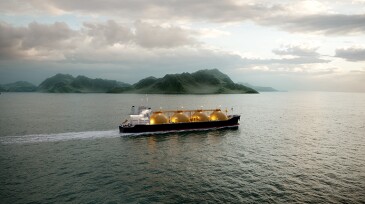
This paper compares project economics of floating liquefied natural gas, onshore liquefied natural gas, and gas-to-wire processes.
-
This paper reviews innovations and technologies used to make the Atlanta field in the Santos Basin a successful case of heavy-oil production in ultradeep water.
-
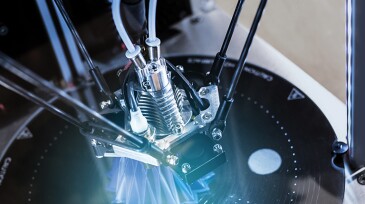
Additive manufacturing can alleviate and avoid long, expensive production shutdowns and reduce supply chain carbon footprints. Key to unlocking this potential is building trust in “printed” parts.
-
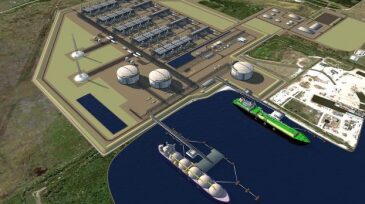
Shell signs on to take LNG from the planned Louisiana plant.
-
For some, the payoff for going green can be astronomical. Others can rest assured that they will be well positioned in the transition.