Onshore/Offshore Facilities

The 2026 Upstream Scale Guidelines establish a common workflow for field measurements, scale modeling, and risk assessment to support more consistent operational decisions.

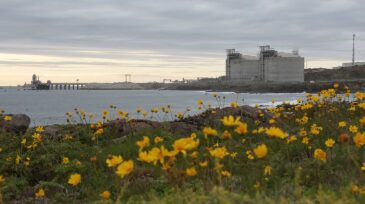
Shell has reached FID on LNG Canada Phase 2, a major expansion that will double the Kitimat facility’s LNG export capacity to 28 mtpa and strengthen long-term supply to growing Asian markets.

The long-term outlook analysis says a potential shift toward new construction could push 2026 production 3% above 2025 levels.
-
 This paper’s intent is to provide a basic understanding of offshore renewable energy, including descriptions of wind and marine-hydrokinetic devices, with a focus on the physical and technical issues.
 -
Despite having strong wind resources and promising record-breaking capacity factors, most sites globally are unsuitable for bottom-fixed units. Floating wind will provide part of the solution for countries seeking to decarbonize their electricity.
-
Wind energy sources located offshore present challenges in transporting large amounts of energy. Energy transport through hydrogen molecules may be a solution. The PosHYdon project is intended to build experience with offshore H2 production and test power-to-gas technologies and integrated systems.
-
A system was designed to extend the offshore wind-energy concept from the power grid to a subsea field-development application. The system integrates a floating foundation with a wind-turbine generator, with all the required utilities hosted directly onboard the same floater.
-
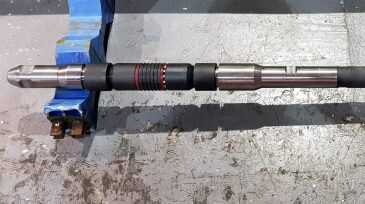
Final lab testing has been completed and field trials of the ultrahigh expansion bridge plug will begin by the end of this year.
-
The Abu Dhabi National Oil Company announced that it has completed the first phase of its large-scale multiyear predictive maintenance project, which aims to maximize asset efficiency and integrity across its upstream and downstream operations.
-
ECA LNG will connect natural gas supply from Texas and the western US to Mexico and other countries across the Pacific Basin. First production from the project is expected in late 2024.
-
The expanded additive manufacturing services widen the companies’ targeted industries to include oil and gas, renewables, maritime, and aerospace.
-
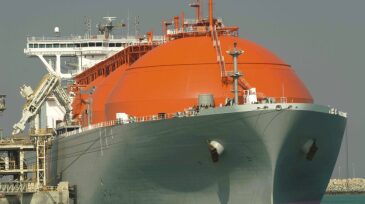
The agreements place most of the LNG volumes through Q1 2022 and continue ADNOC’s expansion into new LNG export markets.
-
Phase 1 covers the modeling and monitoring of assets for six ADNOC Group companies. The four phases of the project are expected to be completed by 2022.