Onshore/Offshore Facilities

Despite significant progress in capturing associated gas for domestic use, Iraq remains the world’s third-largest gas-flaring country as it aims for higher oil and gas production targets.

The 2026 Upstream Scale Guidelines establish a common workflow for field measurements, scale modeling, and risk assessment to support more consistent operational decisions.

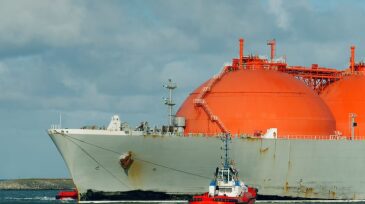
Shell has reached FID on LNG Canada Phase 2, a major expansion that will double the Kitimat facility’s LNG export capacity to 28 mtpa and strengthen long-term supply to growing Asian markets.
-
 The drop in gas prices, although greater than forecast, will not be to the same extent as oil prices.
 -
In 2019, the US experienced the lowest natural gas prices since 2016. This was despite natural gas consumption increasing in the residential and commercial sector by 2% (between October and December) according to the US Energy Information Administration.
-
The complete paper presents an integration of geology, geohazards, geophysics, and geotechnical assessments for a design of an offshore gas production facility and an associated export pipeline.
-
This paper analyzes the risk of hydrate formation and blockage, aiming at various gas/liquid flow patterns and considering the phase distribution and interface distribution characteristics of different flow patterns.
-
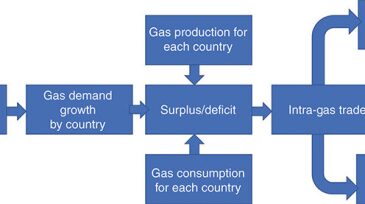
The complete paper analyzes the role of liquefied natural gas (LNG) in balancing the natural gas demand in the Middle East/North Africa (MENA) region.
-
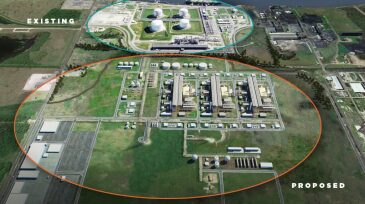
Energy Transfer will look at taking on new partners and possibly reducing the size of the Lake Charles LNG project.
-
The methodology is the industry’s first to address CUI. Along with DNV GL’s new technology, maintenance costs may be reduced by up to 50%.
-
The umbilicals will be designed and manufactured at Aker Solutions’ facility in Alabama.
-
Several companies have provided updates on their North American LNG projects, including Pembina, LNG Canada, and Sempra. The outlooks vary from plans to move ahead to others seeking money to stay afloat.
-
The JIPs managed by DNV GL and Berenschot focused on 3D-printed-component certification and supply chain set-up.