Onshore/Offshore Facilities

The 2026 Upstream Scale Guidelines establish a common workflow for field measurements, scale modeling, and risk assessment to support more consistent operational decisions.

Shell has reached FID on LNG Canada Phase 2, a major expansion that will double the Kitimat facility’s LNG export capacity to 28 mtpa and strengthen long-term supply to growing Asian markets.

The long-term outlook analysis says a potential shift toward new construction could push 2026 production 3% above 2025 levels.
-
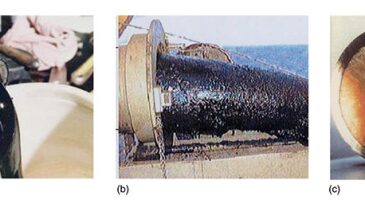
 Banyu Urip crude contains 26% wax, which can lead to flow-assurance challenges in a crude pipeline exposed to lower temperatures. Injection of pour-point-depressant (PPD) chemicals has been considered an effective method to ensure flow of moderate waxy crude.
 -
This paper presents a case study that is an example of how reassessing a flow-assurance risk-management strategy for operating assets can identify opportunities for optimization.
-
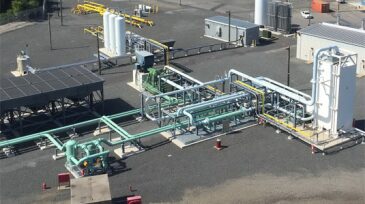
The engineering company Cosmodyne will work directly with the utility company and its EPC contractor for the project, which will utilize its LINEX natural gas liquefier.
-
Operators are increasing capital budgets in the wake of tariffs and quotas initiated by the US government on steel imports, and the product exclusion process has revealed a host of other issues. If the tariffs are here to stay, what does industry hope to see moving forward?
-
Machine learning and artificial intelligence technology offer offshore operators the chance to automate high-cost, error-prone tasks to avoid the effects of inconsistency and errors in analysis, improving efficiencies and safety.
-
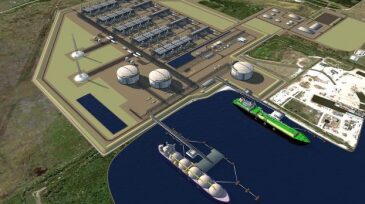
Tellurian remains on track to receive all regulatory approvals and begin work on the export terminal in Louisiana, with an eye on a 2023 startup.
-
Three companies are collaborating to develop the equipment needed to make LNG a feasible alternative fuel for ship owners and operators.
-
Troubleshooting and solving separation problems takes a combination of analytical tools, experience, and a knack for investigation. These 5 lessons provide a starting point for assessment.
-
With new projects scheduled to come on line later this year, the region, which mostly comprises states along the US Gulf Coast, will shift from being a source of natural gas supply to a source of growing demand.
-
The US Army of Corps of Engineers pulled the permit application after the company requested an extension on a review deadline for the project, which could accommodate up to 6 million tons of LNG production annually.