Onshore/Offshore Facilities

Equinor and its partners’ investment in the Troll West Increased Gas Recovery North (TWIN) project aims to unlock around 11 Bcm of additional natural gas from the Troll field, with first production targeted as early as 2028.

The US supermajor will use Permian Basin natural gas to support the hyperscaler’s AI business.

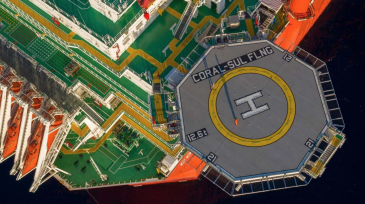
The Coral Norte FLNG is to be the mirror image of the Coral Sul unit, which shipped its first cargo in 2022 after it was put into service in Area 4 offshore Mozambique.
-
 The offshore Mauritania and Senegal project’s initial phase will deliver around 2.4 mtpa of LNG once fully commissioned.
 -
The French major will supply the Caribbean country with LNG supplies while agreeing to take supplies from future Texas project.
-
Stonepeak will pay $5.7 billion for 40% interest in the project due for FID later this year.
-
Terra Drone will support Aramco's operations and Saudi Arabia's technological and economic progress.
-
Offshore activity is expected to begin in 2027 with first oil from the 20K-psi project slated for 2028.
-
The strategic buyout of Portugal’s Galp is ADNOC’s first investment in Mozambique as it continues to grow its lower-carbon LNG portfolio.
-
Brazil’s ANP extends BW Energy’s contract for the deepwater field from 2031 to 2042, and BW plans to further develop the field.
-
Plugging operations are scheduled to begin early 2026.
-
The shallow-water subsea tieback to the Jupiter platform is expected to produce about 250 MMcf/D of gas at peak.
-
Ginger is among the 10 upstream projects that BP plans to bring on-stream by 2027 after resetting its strategy to raise oil and gas investments to $10 billion per year.